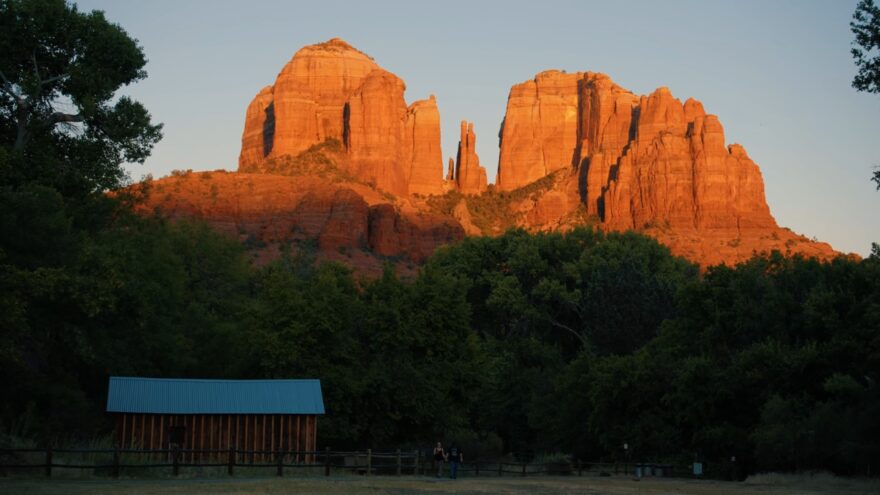
In the dark, the trail is a pale seam of slickrock running uphill, and the only sounds are your own breathing and the scuff of rubber on sandstone. The spires overhead are still black cutouts against a sky going from charcoal to bruised purple.
Then, somewhere east over the rim country, the first light arrives – not on the spires above you, but far out across the valley, where the red rocks begin to catch fire one ridgeline at a time.
That moment is the case for the early alarm, and it comes with a steep price in sleep and a steeper one in quadriceps.
The Trail Itself
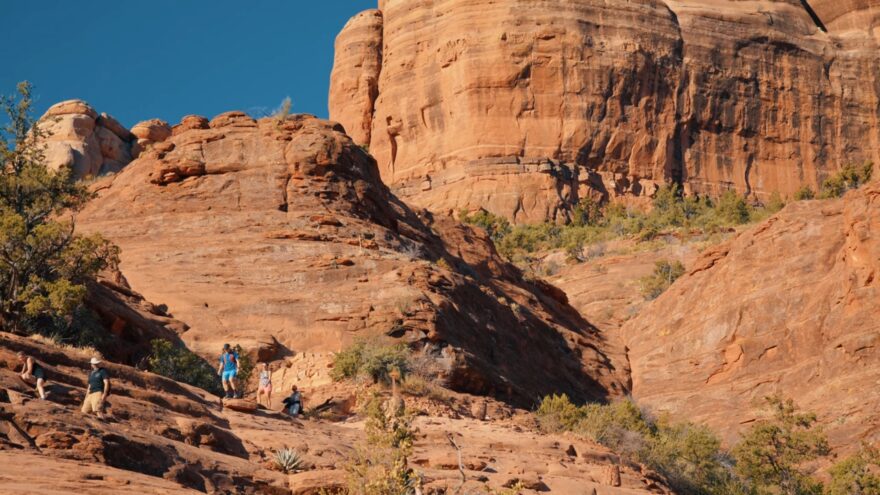
The numbers are short and unforgiving. The Cathedral Rock Trail runs roughly 1.2 miles round trip – the Coconino National Forest lists it at 1.1 – and climbs about 669 feet from a trailhead sitting near 4,040 feet.
The Forest Service rates it strenuous, which surprises hikers who read “one mile” and picture a stroll. The grade does almost all of its work in the back half, where the dirt path runs out and the route becomes bare sandstone tilted toward the sky.
The crux is a chimney-like crack where you stop walking and start using your hands, pulling up on holds polished smooth by a few million boots before yours. It is scrambling rather than climbing – no rope, no exposure that will end you – but it demands attention, three points of contact, and footwear that grips.
The maintained trail tops out not at the true 4,967-foot summit, which is a technical route, but at a saddle wedged in the notch between the two largest spires. That saddle is the destination. From it the land falls away on both sides, and Sedona’s red rock country spreads out in every direction you turn.
Most people allow two hours for the round trip, including time at the top. Strong hikers do it in well under that. The trail leaves State Route 179, the Red Rock Scenic Byway, about three and a half miles south of the highway junction in town, then a short way up Back O’ Beyond Road.
What the Rock Is Made Of
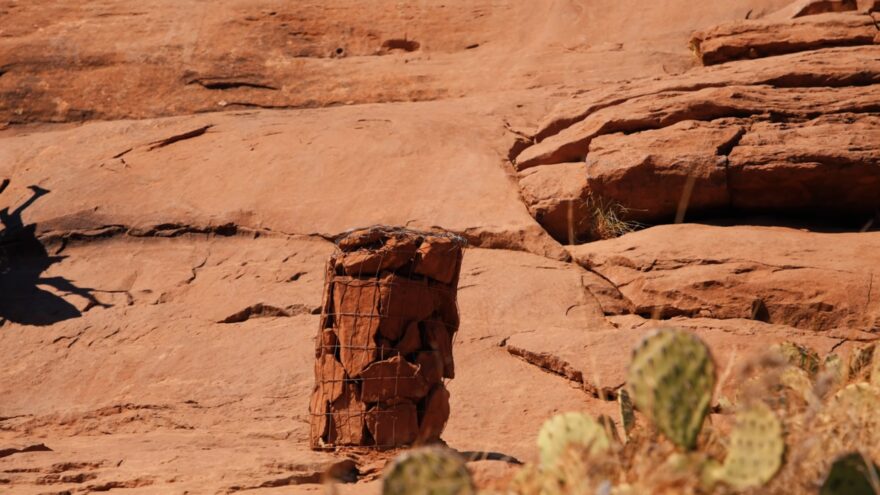
The color is the first thing anyone asks about, and the answer is rust. The bulk of Cathedral Rock is the Schnebly Hill Formation, a dark red sandstone 800 to 1,000 feet thick, laid down during the Permian Period roughly 280 million years ago when this corner of the continent was a coastal desert at the edge of Pangaea.
Iron in the sand oxidized over deep time into hematite, which coats the quartz grains and gives the whole formation its sunburnt tone.
Look closely partway up the spires, and you can pick out a pale gray band running through the red: that is the Fort Apache limestone member, deposited during a brief flooding of the region by an ancient sea, a thin gray comma in a long red sentence.
The spires exist because of fractures. According to the Arizona Geological Survey, a set of northwest-trending joints in the sandstone gave water and weather a head start, and erosion did the rest, widening the cracks into the gaps you scramble through.
The cream-colored caprock at the very top is Coconino Sandstone, harder than what lies beneath it, which is why the softer red rock erodes back into cliffs while the pale cap clings on.
The cathedral shape that early settlers named the formation for is, in plain terms, what is left after a few hundred million years of selective demolition.
Sunrise or Sunset?
Most guides bury this point: the postcard image of Cathedral Rock – the spires burning orange, mirrored in Oak Creek – is a sunset photograph, and it is almost never taken from the trail.
It comes from the west side of the formation, down at Red Rock Crossing near Crescent Moon, where the low evening sun strikes the western faces head-on and sets them glowing. If that specific shot is what you came to Arizona for, you want late afternoon, a tripod, and a tolerance for crowds.
From the saddle at dawn the geometry runs the other way. The sun comes up behind and to the side of the formation, so the spires above you light slowly and from an oblique angle while the real show happens out in front of you, across the valley, as first light floods the eastern red rocks and the long shadows retreat.
The rock you are standing in does not blaze the way it does at sunset; the country around it does.
What sunrise buys you instead is the place itself. The saddle that holds a queue of photographers at sunset is often empty at dawn, sometimes entirely yours. The air is cold and still.
The descent – the part that injures people – happens in full daylight rather than failing twilight, which matters more than it sounds when the way down is the same polished sandstone you hauled yourself up in the dark.
And in the warm months, a pre-dawn start gets you off an unshaded rock before the heat turns serious. The verdict splits cleanly by temperament: sunset for the photograph, sunrise for the experience.
Getting There Before Dawn
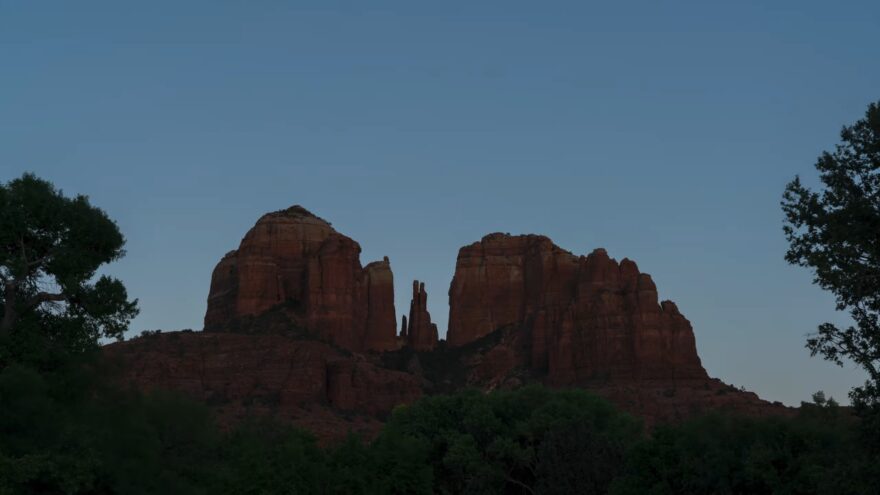
The trailhead lot is the catch, and it has gotten more complicated than the trail. From Thursday through Sunday, year-round, the two small lots at the Cathedral Rock trailhead close while the free Sedona Shuttle is running, and you reach the trail by riding from the North SR 179 Park and Ride at 1294 State Route 179.
The shuttle is free, needs no reservation, and solves the parking problem outright – but it does not start running until the morning is already underway, generally around 7 a.m.
That schedule creates a narrow window for sunrise hikers. Outside shuttle hours, the trailhead lots reopen, so in late spring and summer, when the sun clears the horizon close to 5:15 a.m., you can drive straight to the trailhead and park before the shuttle ever starts – provided you beat the other forty-odd cars the lots hold.
In winter, sunrise lands near 7:20 a.m., right as the shuttle comes online on weekend days, and the math stops working in your favor; a Monday-through-Wednesday winter dawn, when the lot stays open, and the shuttle doesn’t run at all, is the cleanest shot at a quiet summit.
Either way, you’ll need a Red Rock Pass or an America the Beautiful pass to leave a car at the trailhead during open hours.
What to Pack, and When to Go
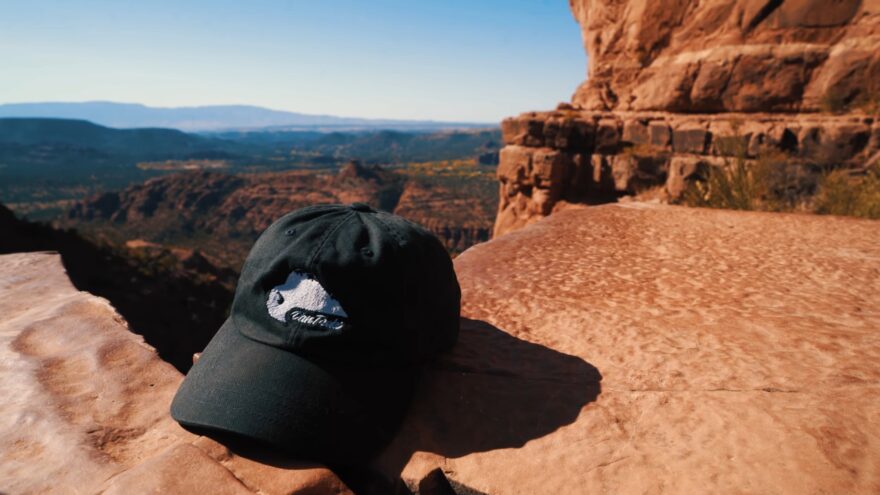
Water comes first and last. The trail has no shade and no water, and the dry desert air pulls moisture out of you faster than the cool temperature suggests. A headlamp is non-negotiable for a sunrise attempt – you will be on the scramble in the dark, and you want both hands free.
Trail runners or hiking shoes with real tread make the slickrock manageable; smooth-soled sneakers turn the descent into a slow-motion negotiation.
Season shapes the rest. Winter mornings on the rock can sit below freezing, and standing water near the trailhead sometimes freezes into glassy patches, so layers and caution earn their place in the pack.
Summer brings the opposite problem and a second one: the North American monsoon fires up afternoon thunderstorms from roughly July into September, which is a strong argument for being up and down before midday rather than caught on exposed sandstone with lightning around.
Spring and fall are the easy seasons for weather and the hard ones for crowds. A little planning ahead of a trip into the red rocks goes a long way toward landing the morning you pictured.
The Vortex Question
View this post on Instagram
Cathedral Rock is one of Sedona’s named energy vortex sites, and on any given day a fair share of the people at the saddle are there for that as much as the view.
Believers describe the spot as carrying a calming, restorative energy; skeptics describe a quiet high place where the light is good and the mind tends to settle, which may amount to the same felt experience by a different name.
Worth holding in mind regardless of where you land: the formation is sacred ground to the Yavapai and Apache, woven into origin stories long predating its tourist fame.
You can read more about how the vortex sites fit into the wider red rock landscape, but the simplest way to honor the place is the usual one – stay on rock, pack out everything, and keep the volume down for whoever climbed up to be alone with it.
So, Is It Worth the Early Alarm?
@deabrigs Cathedral Rock Hike in Sedona, Arizona. WORTH the wake up. #sedona #sunrisehike #cathedralrock #travel #arizona ♬ original sound – Seth – Seth Summers
For most people, yes – with a clear-eyed sense of what you are trading for. The early start does not deliver the glowing-spire photograph; that belongs to sunset and to the creek-side viewpoints on the formation’s western flank.
What it delivers is a short, demanding climb topped by a saddle you may have to yourself, a descent made safe by daylight, cool air on an otherwise punishing rock, and the slow flooding of light across one of the more striking landscapes in the Southwest. That is a fair return on a few hours of sleep.
If the scramble or the alarm clock is more than you want, the red rocks have gentler ways to greet the morning.
The nearly flat Bell Rock Pathway, a few minutes south on the same byway, frames many of the same formations at first light without the hand-over-hand finish – proof that the early alarm is worth setting in Sedona, even when you’d rather keep your feet on level ground.