No animal on Earth is truly death-proof. Predators, disease, injury, starvation, and environmental collapse can kill even species with extraordinary survival biology.
Effectively immortal animals earn that label because their bodies resist ordinary age decline in unusual ways.
Aging often involves senescence, a gradual loss of normal function over time. In cells, senescence can mean that cell division stops and cells eventually die. In a whole animal, it can mean weaker recovery after stress, illness, or damage.
Even so, “effectively immortal” does not mean invincible. It means these animals rarely seem to die simply because old age catches up with them.
1. Immortal Jellyfish – An Animal That Rewinds Its Life
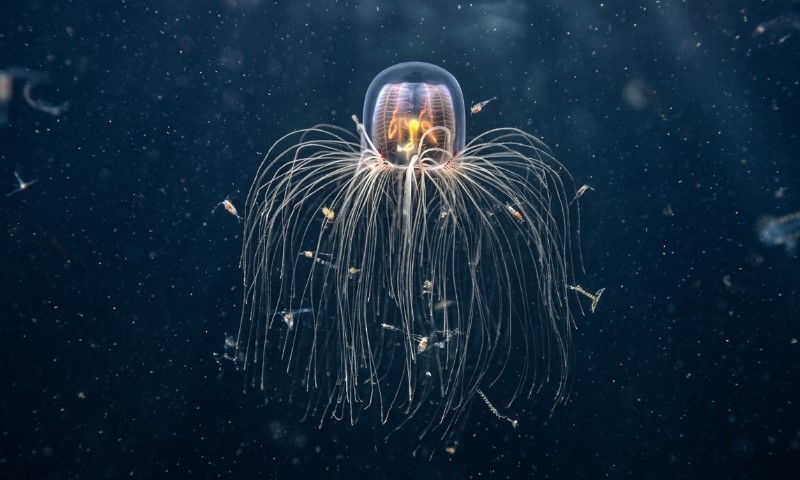
Turritopsis dohrnii is often called the immortal jellyfish because it can reverse its adult stage under stress.
Small and transparent, it lives in oceans around the world, including deep waters near Japan and in the Mediterranean Sea.
Its life cycle normally begins as a fertilized egg that becomes a larval planula. After attaching to a rock, boat hull, ocean floor, or another surface, the planula grows into a polyp.
A polyp has a tube-shaped body, a mouth at one end, and a foot-like attachment at the other. Polyp colonies later produce young jellyfish that mature into adult medusae.
Turritopsis dohrnii breaks that one-way pattern. When starvation, injury, or environmental pressure hits, an adult medusa can shrink into a tiny blob of tissue.
That tissue can become a sexually immature polyp again. After that reset, it can grow back into an adult.
Its immortality is still theoretical. Disease can kill it, predators can eat it, and bad conditions can destroy it. Under ideal conditions, though, it could keep cycling backward and forward through life stages.
Possible angle: closest known case of biological immortality.
2. Hydra – A Tiny Freshwater Animal That Does Not Seem to Age
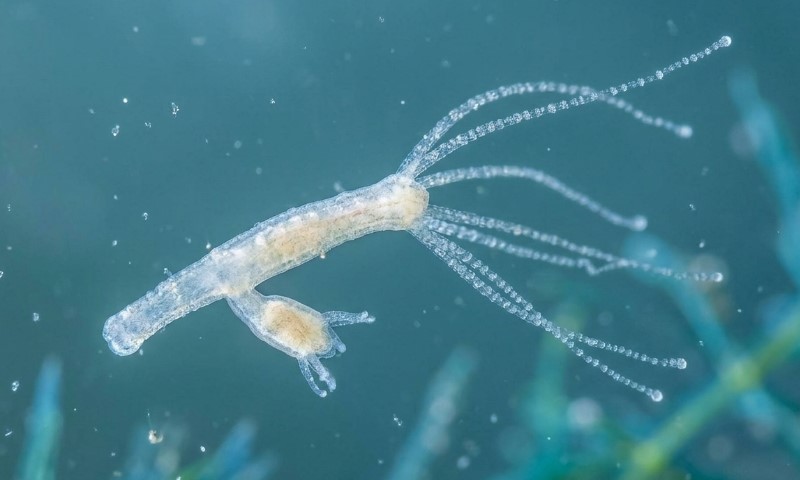
Hydra are small animals related to jellyfish.
Their bodies are simple: a tube-shaped body, a tentacle-ringed mouth at one end, and an adhesive foot at the other. In ponds and rivers, they attach to surfaces and catch passing prey with stinging tentacles.
What makes the hydra remarkable is its lack of clear senescence. Instead of showing ordinary age decline, they keep renewing tissues through active stem cells.
Old or damaged cells are replaced continuously, which helps the animal keep functioning without obvious deterioration.
A key genetic factor involves FoxO genes. These genes help regulate cell lifespan in many animals, including worms and humans. In Hydra, strong FoxO activity appears tied to regeneration and long-term tissue renewal.
When researchers blocked normal FoxO function, hydra cells began showing signs of aging and lost some regenerative ability.
Possible angle: a simple animal with a complex secret to youth.
3. Lobsters – Not Quite Immortal Shellfish
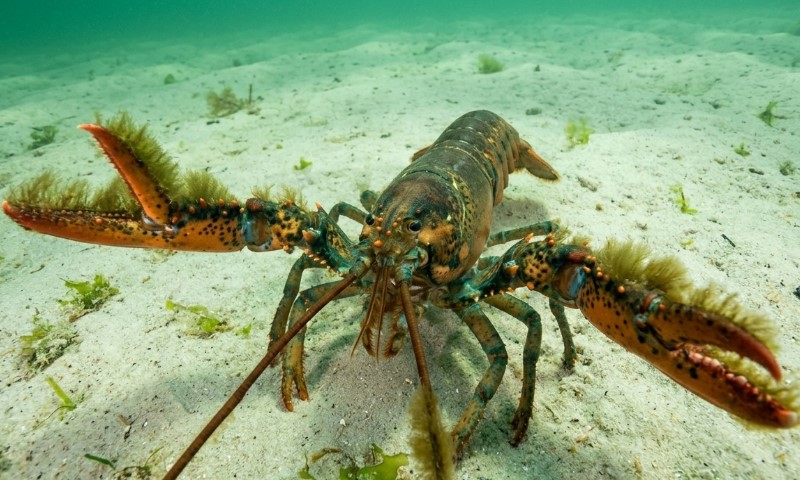
American lobsters, Homarus americanus, can live more than 100 years if predators, disease, or accidents do not kill them.
Their long lives are tied partly to telomeres, the protective caps at chromosome ends.
During normal cell division, telomeres shorten. Once they become too short, many cells enter senescence and stop dividing.
Lobsters produce high levels of telomerase throughout adulthood. Telomerase helps rebuild telomeres, allowing cells to keep chromosome protection longer than most animals can.
Lobsters keep growing, but their shells do not grow with them. To gain size, they must shed old shells and grow new ones.
Old, large lobsters need huge energy reserves for each molt. Eventually, exhaustion, infection, shell collapse, or predation can kill them.
Lobsters fit the almost-immortal animals category only with caution. They resist some normal signs of aging, but their own growth can become fatal.
Possible angle: they may not die of old age in the usual way, but growth can become a trap.
4. Planarian Flatworms – Masters of Regeneration
Planarian flatworms are famous for rebuilding damaged bodies. Planaria torva is one example linked with indefinite lifespan claims because planarians can regenerate lost body parts through powerful adult stem cells.
A damaged planarian can regrow missing tissue. Serious injury does not always lead to permanent decline because its stem cells can rebuild needed body structures.
That repair capacity makes planarians major examples in studies of biological renewal.
Their regenerative ability matters because it changes the meaning of injury. For many animals, major tissue loss leads to lasting damage or death. For planarians, damage can activate rebuilding.
Planarians count among immortal animals because they may avoid ordinary aging through constant repair rather than through life-cycle reversal or dormancy.
Possible angle: for planarians, injury can become a path back to youth.
5. Bdelloid Rotifers – Microscopic Survivors
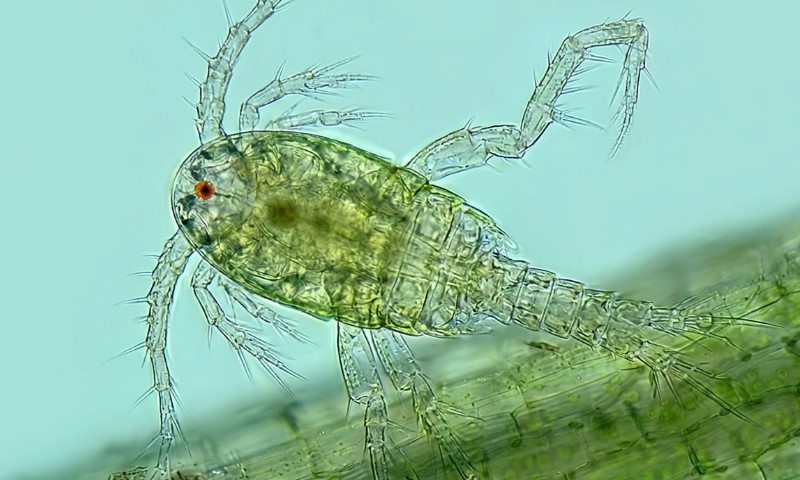
Bdelloid rotifers are tiny freshwater zooplankton with extraordinary survival abilities.
Their immortality claim is not about endless youth in one active body. It is about surviving conditions that would kill many other animals.
When stress becomes severe, bdelloids can enter a dormant state similar to hibernation. Activity slows, and they can wait until safer conditions return.
Their survival range is the key data:
- Can tolerate high heat
- Can tolerate low temperatures
- Can tolerate extreme pressure
- Can pause activity in a dormant state
- Can become active again after conditions improve
Bdelloid rotifers do not reverse their life cycle like Turritopsis dohrnii. They do not show the same visible agelessness as Hydra.
Their advantage is endurance. Instead of fighting harsh conditions while active, they shut down much of life and wait.
Possible angle: they do not defeat death so much as pause life until conditions improve.
6. Tardigrades – Nearly Indestructible Water Bears
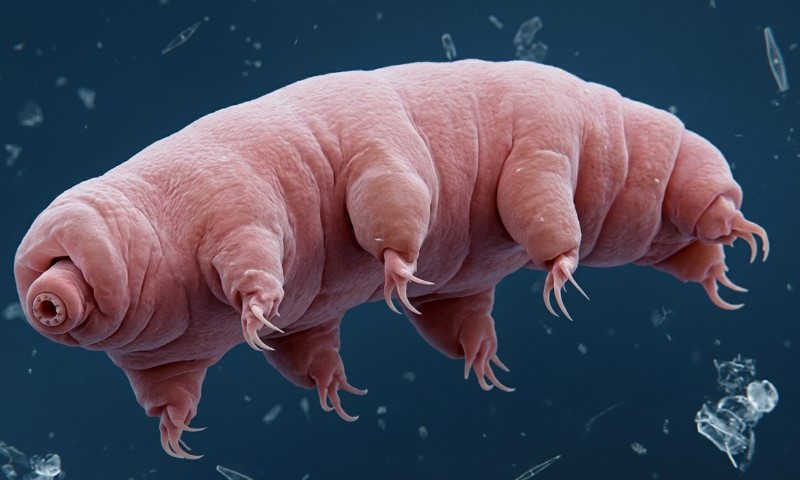
Tardigrades, also called water bears, are tiny animals known for extreme durability.
Hypsibius dujardini is one example. Many tardigrades measure no more than 1.5 millimeters long.
Their main survival tool is cryptobiosis. During cryptobiosis, a tardigrade dries into a dormant tun shape. Its metabolism nearly stops. When water returns, it can revive.
Several survival records explain why tardigrades are often included among almost immortal animals:
- Can survive boiling temperatures above 100°C
- Can survive freezing near -272.8°C
- Can survive drying out
- Can tolerate extreme radiation
- Can survive exposure to outer space
- Can stop metabolism for long periods and revive after water returns
Tardigrades are not biologically immortal like hydra or Turritopsis dohrnii. Their strength is not endless youth.
Their strength is the ability to endure extremes by pausing life almost completely.
Possible angle: not immortal, but incredibly hard to kill.
7. Ocean Quahog Clams – 500-Year Survivors
View this post on Instagram
Ocean quahog clams are not immortal in a strict sense, but their extreme longevity challenges normal ideas about animal aging. Some can live more than 400 years.
One famous ocean quahog, Ming, lived about 500 years. It was the oldest known non-colonial animal on record and died accidentally after researchers dredged it out of the ocean to study its age.
Slow aging appears central to the ocean quahog’s long life. Slow cell replacement may play a role, although the exact reason these clams mature so slowly still needs more research.
They do not reset their life cycle like the immortal jellyfish, and they do not enter cryptobiosis like tardigrades. Their power is extreme slowness.
A 500-year lifespan means Ming was alive before Shakespeare was born.
Among almost immortal animals, ocean quahog clams represent extreme longevity rather than life-cycle reversal or suspended animation.
Possible angle: a clam alive before Shakespeare entered history.
Closing Thoughts
Almost immortal animals are not impossible to kill. Injury, starvation, disease, predators, and environmental disasters can end their lives.
Aging is not one fixed process across all animal life. Some species resist cellular damage.
Some repair DNA protection unusually well. Some replace tissue again and again. Some survive danger by shutting biological activity down until conditions improve.
Studying these animals may help explain why humans age in the first place. Nature has already produced many ways to delay decline, repair damage, restart growth, or pause life when survival demands it.