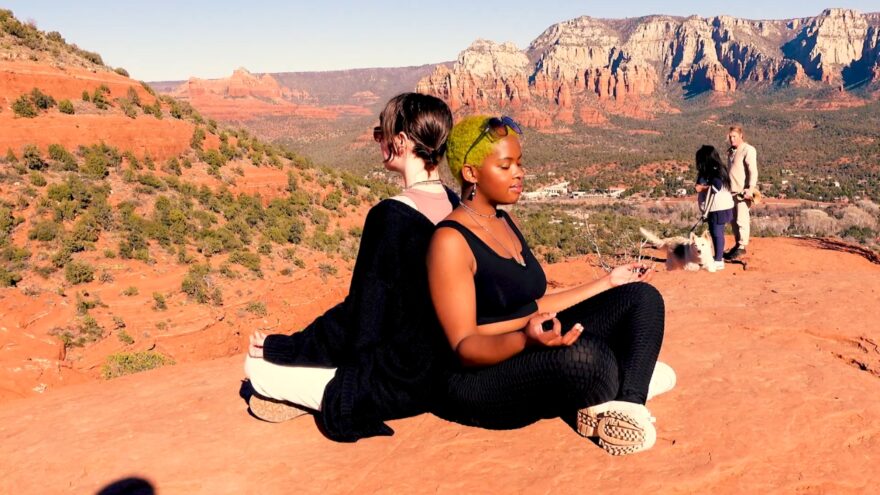
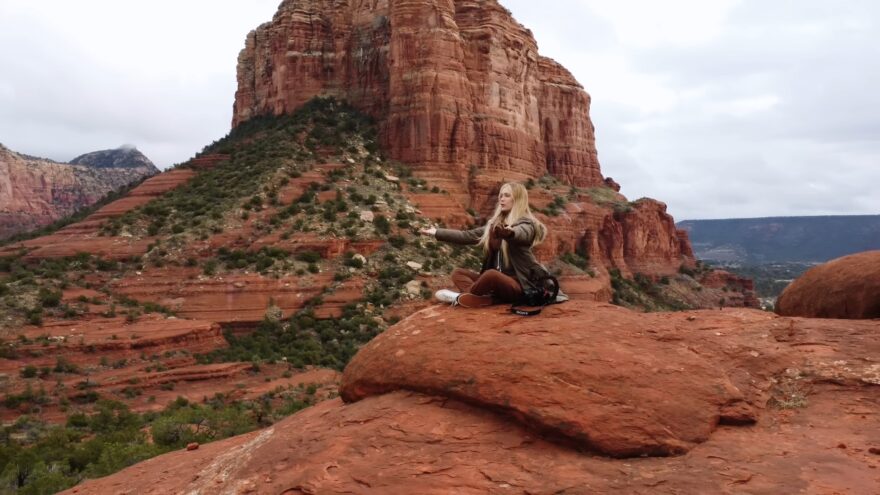
Sedona vortex sites are easy to oversell and just as easy to dismiss. The better way to visit them is simpler: go to the main sites, pay attention to the place, and notice what changes in your body, mood, and pace when the trail opens to the rocks.
Some visitors describe tingling, warmth, emotional release, calm, sharper focus, or a sudden need to sit down and stop talking. Others feel nothing mystical at all, only heat, wind, tired legs, open desert air, and a view that makes the drive worth it. Both reactions are normal.
Visit Sedona identifies four main vortex sites that most visitors start with: Airport Mesa, Bell Rock, Cathedral Rock, and Boynton Canyon. Each one has a different setting, different physical effort, and a different kind of experience.
That is the useful part. You do not need to force a spiritual reaction to understand why people keep going back.
What Is A Sedona Vortex?
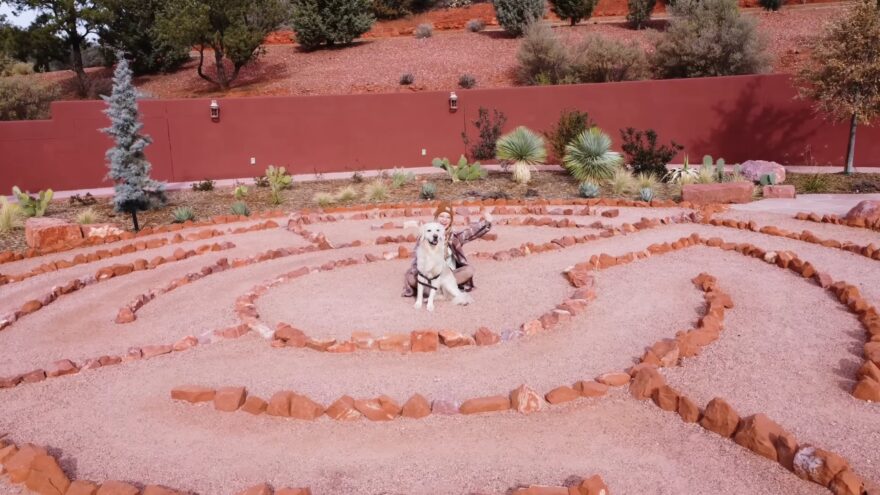
A Sedona vortex is a place where many visitors believe energy feels more concentrated, usually around major sandstone formations. The idea belongs partly to modern Sedona spiritual culture and partly to the long pull that the landscape has had on people who come here for prayer, ceremony, hiking, solitude, and renewal.
There is no simple scientific test that proves a visitor will feel something at a vortex site. Visit Sedona explains that many reported sensations are personal and subjective, while conventional science has not fully validated vortex energy as a spiritual force.
That does not make the trip pointless. The sites sit in some of the most memorable parts of Sedona. Even a skeptical visitor can feel the effects of altitude, desert heat, wind, physical effort, silence, open space, and the visual shock of sandstone cliffs changing color by the hour.
As we already covered in our guide to Sedona vortexes on the Red Rock Scenic Byway, Bell Rock and Cathedral Rock are the easiest vortex stops to combine with a drive on SR 179.
They are also the best introduction for visitors who want the experience without planning a full backcountry day.
The Four Main Sedona Vortex Sites At A Glance
Vortex Site
Best For
Effort Level
What Visitors May Feel
Best Time To Go
Bell Rock
First-time visitors, easy access, short walks
Easy to moderate
More alert, energized, restless, or focused
Morning or late afternoon
Cathedral Rock
Views, photos, and a more physical experience
Moderate to hard in sections
Awe, intensity, heavy breathing, emotional release
Sunrise, early morning, or sunset
Airport Mesa
Sunset, quick access, panoramic views
Easy to moderate
Lifted mood, mental clarity, wind, and exposure
Late afternoon, before sunset, crowds peak
Boynton Canyon
Canyon walking, calmer space, longer time outside
Moderate
Grounded, settled, inward, less rushed
Morning, especially in warmer months
Bell Rock: The Easiest Place To Start
Bell Rock sits right off State Route 179 near the Village of Oak Creek, so it works well as a first stop. You see it before you reach the parking area, and the shape is hard to miss.
The Coconino National Forest Bell Rock Pathway page describes the trail as a very popular route that parallels SR 179, with views of Bell Rock, Baby Bell Rock, Courthouse Butte, and nearby landmarks. Most of the pathway has a wide, hard surface, although some areas near Bell Rock become rocky and rough.
That mix makes Bell Rock the most practical vortex site for travelers who do not want a hard hike. You can take a short walk, climb partway if conditions feel right, or simply sit with the formation in view.
What You May Actually Feel At Bell Rock
Bell Rock feels active because the setting is open. There is more sky, more sun, more movement on the trail, and more traffic nearby than at Boynton Canyon or Cathedral Rock.
Visitors who describe Bell Rock as energizing may be reacting to that exposure as much as the vortex story.
Expect a clear, awake feeling rather than a soft one. The trail can make people want to keep moving. The views are broad, the rock is close, and the whole stop feels less like a retreat and more like a reset.
In our earlier guide to Bell Rock Vortex, we noted that the site has long been described as an upflow or electric-energy area. A practical translation for visitors: Bell Rock is a good choice when you want a short walk, an easy landmark, and a place that feels open rather than secluded.
Cathedral Rock has the kind of profile that appears on postcards, travel guides, and social feeds for a reason. The formation has weight. It looks different from every angle, and it feels larger once you stand below it. Many visitors reach it from the Back O’ Beyond side. Others experience the formation from Red Rock Crossing and the Crescent Moon area, where Cathedral Rock rises above Oak Creek. As we already covered in our guide to Cathedral Rock at Red Rock Crossing, the water-level view is one of the easiest ways to understand why the site became so famous. Cathedral Rock is not the most casual stop if you plan to hike upward. The climb includes steep sandstone sections, hand-and-foot movement in places, and plenty of people during popular hours. That physical effort changes the experience. Cathedral Rock can feel intense because your body is working. Your breathing changes. Your legs burn. The view opens in stages. The trail can feel exposed, especially if you dislike steep rock or crowded, narrow sections. People who describe emotional release here may be feeling a mix of effort, fear, relief, and the sudden view from higher ground. That does not make the feeling false. It makes the experience more understandable. If Bell Rock wakes people up, Cathedral Rock can strip the day down. You pay attention because the trail requires it. By the time you stop, the silence between voices can feel sharper. Airport Mesa is the vortex site for travelers who want a short stop, a wide view, and a clear sense of Sedona’s layout. The location is close to town, so it does not feel as removed as Boynton Canyon or as physically demanding as Cathedral Rock. The view is the point. From Airport Mesa, Sedona spreads out below, with sandstone formations in nearly every direction. The stop works well near sunset, although sunset also brings crowds, tight parking, and a less personal experience. Airport Mesa can feel buzzy. The road is nearby, the viewpoint is popular, and the wind can be noticeable. Some visitors interpret the site as electric or mentally clarifying. In plain terms, the combination of height, air, traffic, sunset light, and open views can make the mind feel switched on. This is not the best vortex site for deep stillness unless you arrive early or catch a less crowded window. It is better for orientation, photography, and a quick hit of the Sedona scale. Boynton Canyon feels different because the landscape closes around you. Instead of a quick landmark stop, the canyon asks for more time. The walk, the walls, the shade patterns, and the distance from road noise all change the mood. The vortex area most visitors talk about sits near the beginning of the canyon, around the Kachina Woman formation and the nearby knoll. Many people continue deeper into the canyon, but the vortex visit itself does not require completing the full trail. Boynton Canyon feels more settled than Bell Rock or Airport Mesa. The canyon shape narrows attention. Sound changes. The trail gives you time to slow your breathing before you even reach the area people identify with the vortex. Visitors who want a calmer, more inward experience usually do better here than at the busier roadside stops. The feeling may be less dramatic, but it can last longer because the setting gives you more room to stay with it. For most first-time visitors, Bell Rock is the easiest start. Cathedral Rock is the most memorable if you can handle the climb or choose the creek view. Airport Mesa works when time is limited. Boynton Canyon is best when you want the visit to feel less rushed. As we wrote in our guide to Red Rock Scenic Byway SR 179, the road already passes near some of Sedona’s most recognizable formations, including Bell Rock, Cathedral Rock, and Chapel of the Holy Cross. That makes the Byway the easiest route for visitors who want a vortex-focused day without crossing town several times. The Coconino National Forest pass program says the Red Rock Pass applies to many Sedona-area Forest Service fee sites, including Bell Rock Pathway, Boynton Canyon Trailhead, and Cathedral Rock Trailhead. The America the Beautiful Pass can be used in place of a Red Rock Pass at many Coconino National Forest sites, but not at concessionaire-managed day-use areas that require a separate Coconino Pass. Parking can shape the whole vortex day. Cathedral Rock and other popular trailheads fill quickly during busy seasons, weekends, and holiday periods. A plan that looks simple on a map can lose an hour if every lot is full. The Sedona Shuttle trailhead routes operate year-round, Thursday through Sunday, with daily service during spring break and some holidays. The shuttle gives free parking and free rides to several popular trailheads, and no reservation is needed for trailhead shuttles. For a vortex-focused visit, check shuttle routes before choosing your order. A shuttle plan can be easier than circling a full trailhead lot, especially around Cathedral Rock. Sedona vortex sites attract hikers, spiritual travelers, photographers, families, skeptics, and people who simply want a good view. Everyone shares the same limited trail space. Keep voices low near people meditating or praying. Stay on marked trails. Do not carve, stack rocks, remove stones, or step into fragile areas for a photo. Pack out everything you bring. A vortex visit should not leave the land worse than you found it. There is also no need to pretend. If you feel something, take the time to notice it. If you do not, you still visited some of the most scenic formations in Arizona. Sedona does not require a forced reaction. Morning: Start at Bell Rock while the light is soft and the heat is lower. Walk part of the Bell Rock Pathway and decide whether to climb a little higher. Late Morning: Drive toward Cathedral Rock. Choose the Back O’ Beyond trailhead if you want the climb, or Red Rock Crossing if you want the view without the scramble. Afternoon: Take a break for lunch and shade. Midday is usually the worst time to force another exposed trail. Late Afternoon: Visit Airport Mesa before sunset crowds peak. Stay for the view if parking and weather cooperate. Second Morning Option: Save Boynton Canyon for another morning. It deserves more time and feels better when it is not squeezed into the end of a long day. Sedona’s vortex sites are worth visiting even if you are not sure what you believe. Bell Rock feels open and active. Cathedral Rock feels physical and dramatic. Airport Mesa feels exposed and panoramic. Boynton Canyon feels slower and more contained. The best approach is simple: pick the site that matches your energy level, go early or late, bring water, respect the trail, and let the place be what it is. Some people leave with a spiritual story. Others leave with dusty shoes, better photos, and a calmer head. Both count as a successful Sedona day.Bell Rock Tips
Cathedral Rock: The One That Feels The Most Intense
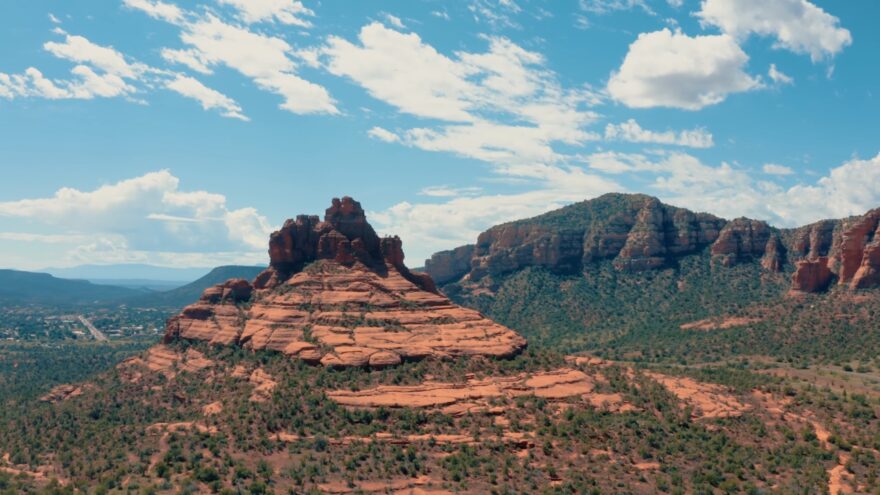
What You May Actually Feel At Cathedral Rock
Cathedral Rock Tips
Airport Mesa: The Fastest Vortex Stop With Big Views
What You May Actually Feel At Airport Mesa
Airport Mesa Tips
Boynton Canyon: The Best Choice For A Slower Morning
What You May Actually Feel At Boynton Canyon
Boynton Canyon Tips
Which Sedona Vortex Should You Visit First?
If You Want…
Start With…
Why
An easy first visit
Bell Rock
Simple access, clear landmark, flexible walking distance
The most dramatic photo setting
Cathedral Rock
Iconic formation, creek views, and a more physical hike option
A quick sunset stop
Airport Mesa
Wide views close to town, useful for orientation
A calmer half-day
Boynton Canyon
Canyon setting, more walking time, and less roadside feel
A drive-based plan
Bell Rock and Cathedral Rock
Both connect naturally with SR 179 and the Red Rock Scenic Byway
What To Bring To A Sedona Vortex Site
Parking And Shuttle Notes Before You Go
How To Visit Without Turning It Into A Performance
A Simple One-Day Vortex Route
FAQs
Bottom Line