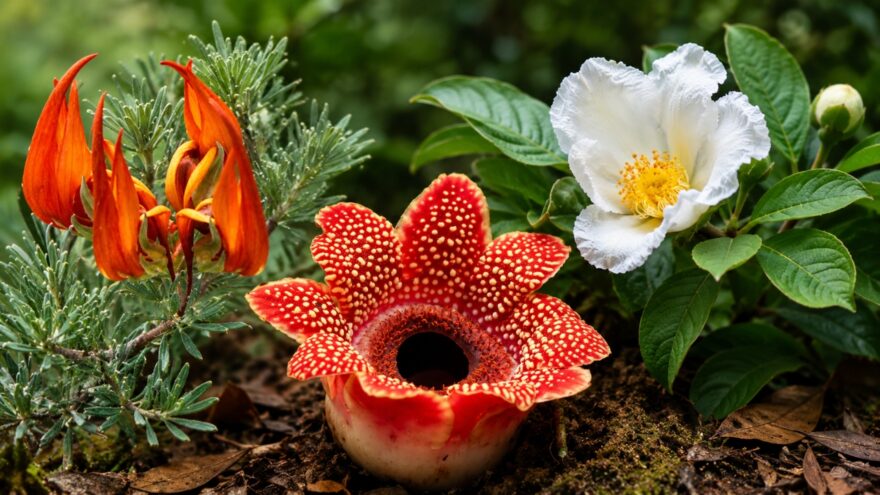
Some flowers are rare because only a few survive. Others are rare because they bloom briefly, unpredictably, or in places most people will never reach.
A single bloom can send crowds to a botanical garden, pull hikers into humid rainforests, or keep plant lovers awake through the night.
People are drawn to rare flowers because many have been cultivated, rescued, pushed close to extinction, or kept alive through careful conservation.
Rarity can come out of extreme habitats, unusual pollination, slow growth, brief bloom windows, or human pressure.
Seeing one open may take years of waiting, a last-minute trip, special access, or enough restraint to stay away when a wild plant is too vulnerable.
Flowers That Make You Wait
Some rare flowers demand patience before they demand travel. Their blooms may take years to appear, and once they do, the window can close within days.
Titan Arum / Corpse Flower
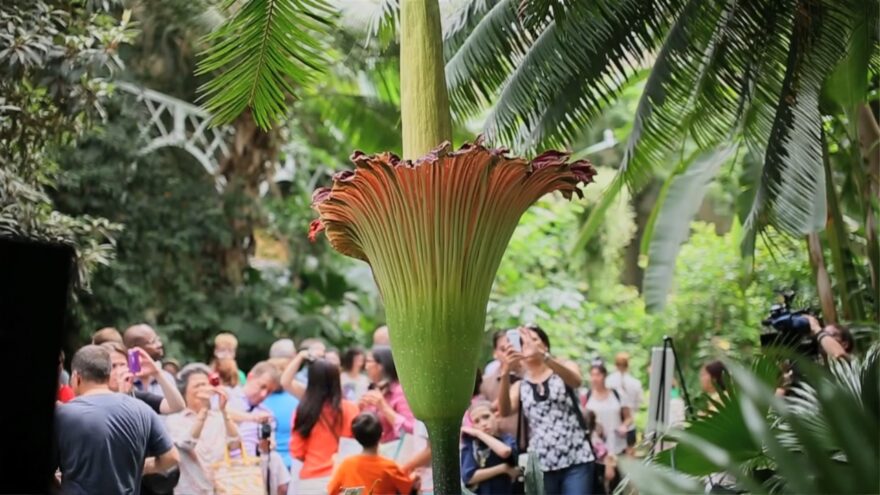
Known as the corpse flower, Titan Arum is one of the most dramatic rare blooms on Earth.
Its scientific name is Amorphophallus titanum, and its natural home is Sumatra, Indonesia.
Plant Natural describes it as reaching 6 to 8 feet in length, while Pink Clover notes that its flower structure can reach over 10 feet tall.
Titan Arum produces the largest unbranched flower structure in the plant kingdom.
A huge spadix rises at the center, wrapped by a deep burgundy spathe. Instead of sweet perfume, it releases a smell similar to rotting flesh.
That odor attracts carrion-feeding beetles, flies, and other carrion-associated pollinators.
A single plant may need 7 to 10 years to produce its first bloom. Later blooms can be irregular, with gaps of several years.
Once open, the bloom usually lasts only 24 to 48 hours.
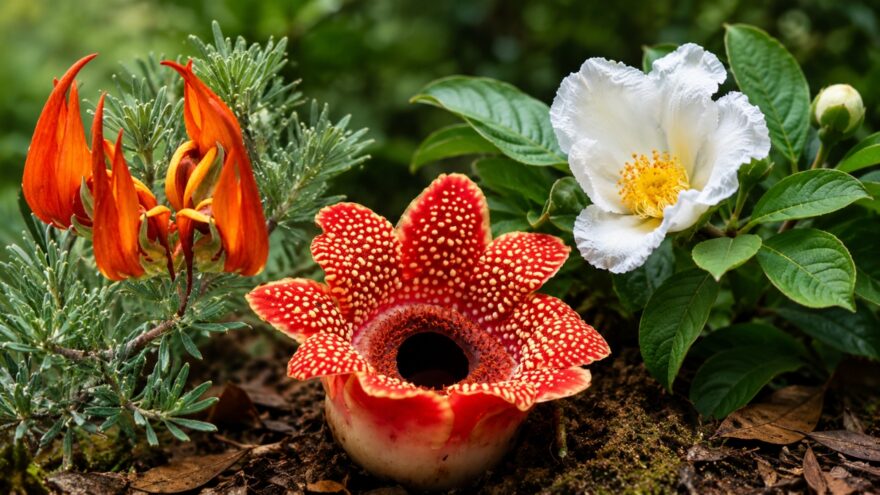
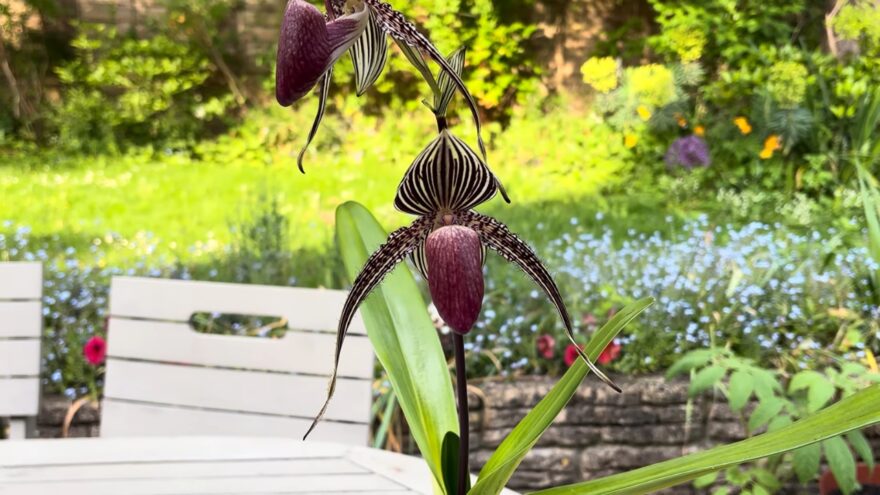
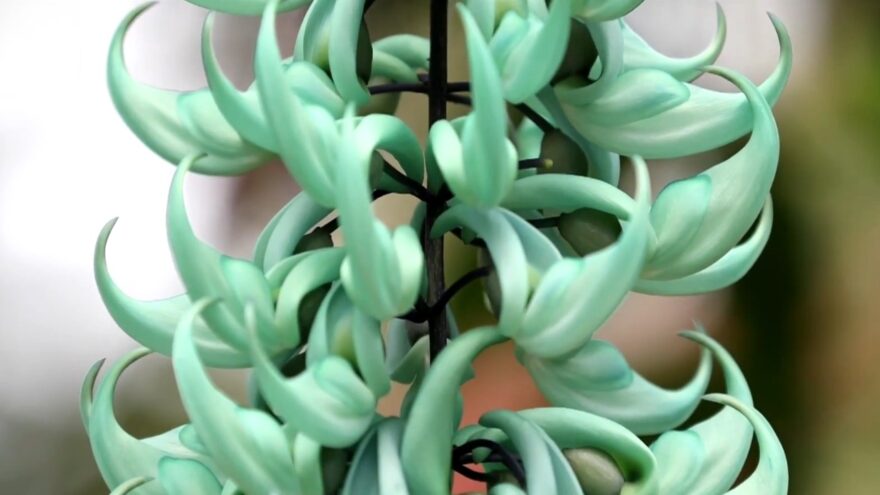
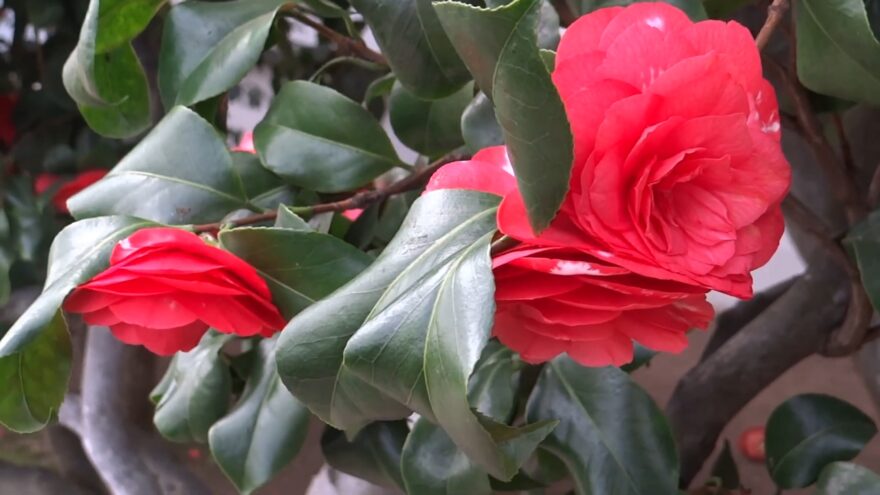
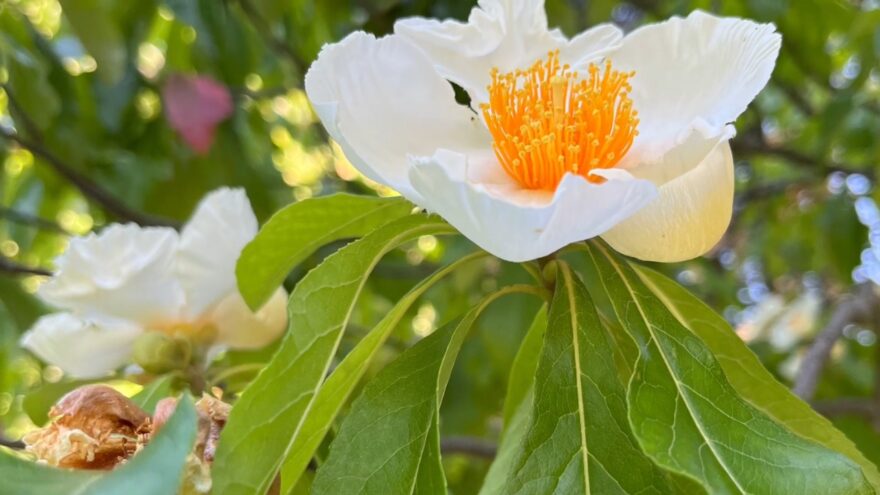
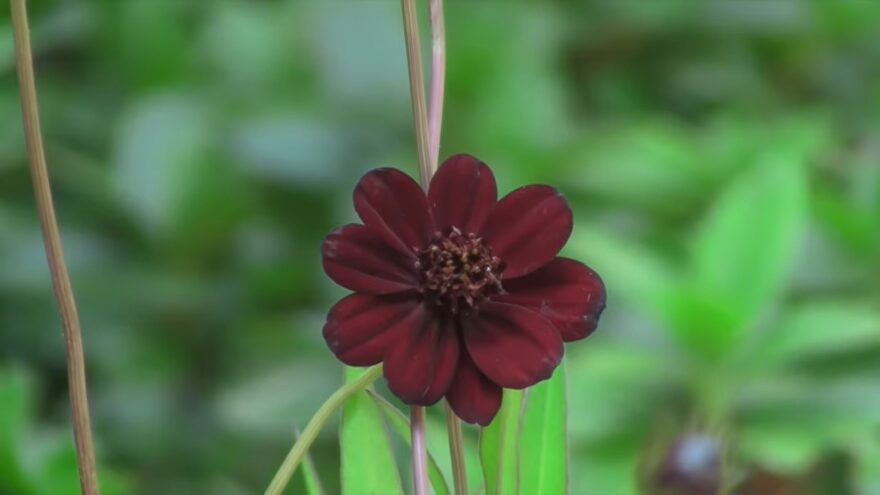
Titan Arum turns flowering into a public theater. Anticipation, crowds, cameras, and an unforgettable odor all become part of the bloom. Native to Southeast Asia, especially Indonesia and Malaysia, it can reach up to 3 feet in diameter. Its life cycle makes it even more unusual than its size. Rafflesia arnoldii has no leaves, stems, or roots. Most of its life happens hidden inside a host vine. Only when a bud develops does the massive flower appear above ground. A putrid smell similar to rotting flesh attracts carrion flies for pollination. That scent helps the flower reproduce, but it also adds to the strange experience of seeing it in person. Habitat loss and illegal collection threaten the species. Any visit should put local protection rules first. Getting close to a rare forest bloom should never damage the habitat that keeps it alive. Rothschild’s slipper orchid, also called Gold of Kinabalu, is rare because of its slow growth and limited range. Its scientific name is Paphiopedilum rothschildianum. It grows on Mount Kinabalu in Borneo, only at elevations between 500 and 1,200 meters. Large, striped flowers make it highly sought after. A plant can take up to 15 years to bloom after seed germination, making each flower the result of a long biological wait. Illegal demand adds another layer of risk. Pink Clover notes that in 2019, a single specimen was valued at over $5,000 on the black market. Despite CITES protections, collectors still target it. Wild viewing is limited because the poaching risk is serious. Safer options include protected orchid collections, conservation sites, and controlled botanical settings. Rothschild’s slipper orchid is rare because it grows slowly and because people want it too badly. Some rare flowers are tied to narrow habitats. Seeing them means entering swamps, forests, mountain areas, or controlled gardens where climate and conservation rules shape the experience. Ghost orchid is one of the most mysterious, rare flowers in North America and the Caribbean. Its scientific name is Dendrophylax lindenii. It is native to southern Florida and Cuba, while Plant Natural also lists Florida, the Bahamas, and Cuba as its geographic origin. Unlike leafy orchids, the ghost orchid grows without leaves. It clings to tree trunks and uses photosynthetic roots to draw moisture and nutrients out of humid air. Its white, spidery flowers can appear to float in midair, giving the plant its ghost-like name. Specific growing needs make it difficult to protect and difficult to see. It needs precise temperature, humidity, and light conditions found in only a few old-growth swamp habitats. Blooming usually happens between June and August, and flowers last only a few weeks. Many plants go years without blooming. Ethical viewing matters because wild populations are protected. In many cases, seeing ghost orchids through conservation programs or botanical settings is better than searching for vulnerable plants in the wild. Jade vine is a rare, turquoise flower native to the tropical forests of the Philippines. Its scientific name is Strongylodon macrobotrys, and it belongs to the legume family. Long hanging clusters carry individual blooms that are about 3 inches long. Its color comes through specialized pigments called anthocyanins. Seeing jade vine in bloom may mean visiting tropical gardens, greenhouses, or protected Philippine forest habitats. Mature vines are needed for flowering, and bloom timing depends on growing conditions. Jade vine also points to a broader conservation issue. Tropical forest plants depend on intact habitats. When forests shrink or degrade, rare flowers lose the conditions they need. A trip to see jade vine is also a reminder that rare colors depend on forest protection. Parrot’s beak is known for strong color and a curved flower shape. Its scientific name is Lotus berthelotii. Its color range includes fiery reds, oranges, bright yellows, and purples. Nectar-rich flowers attract specific bird species, which carry pollen as they feed. Habitat loss and climate change have placed the plant at risk. Today, seeing a parrot’s beak is more likely in cultivation than in the wild. Botanical gardens and responsible growers offer a safer option than disturbing original habitats. Responsible viewing also means respecting conservation limits. Rare island plants can suffer when visitors step off paths, remove cuttings, or buy plants through questionable sources. Parrot’s beak shows how cultivation can help protect a flower that has become difficult to sustain in its original habitat. Some rare flowers are not just hard to see. They exist because people kept them alive after wild populations vanished or nearly vanished. Middlemist Red camellia is one of the rarest flowering plants by population count. Only two known specimens exist today: one at the Chiswick House conservatory in London and one in a garden in New Zealand. John Middlemist brought it to England in 1804 after it had grown in China. It is now extinct in its native habitat. Despite the name, its flowers are deep pink and rose-like rather than red. Both surviving plants bloom each year reliably, but reliability does not mean security. Their survival depends on human cultivation, protected growing conditions, and careful maintenance. Seeing one open means visiting one of two known cultivated locations during bloom season. A visitor sees more than a camellia. A visitor sees a plant that survives because people continued caring for it after it disappeared in its original home. Franklin tree, scientifically known as Franklinia alatamaha, once grew along the Altamaha River in Georgia. No wild sighting has been recorded since 1803. Today, it survives through cultivation. Mature trees reach 10 to 20 feet tall. Their flowers resemble small white cups, with golden-yellow stamens and a sweet scent that attracts pollinators and people. Plant Natural credits American botanist John Bartram with helping save the Franklin tree before its complete extinction. Seeing Franklin tree flowers usually means visiting arboretums, botanical gardens, or special gardens that grow the tree. Bloom timing matters, but cultivated access is far more practical than searching for a wild plant that has not been seen for more than two centuries. Every bloom belongs to a rescued line. Franklin tree proves that conservation can keep a species present after its wild disappearance. Chocolate cosmos is a Mexican wildflower extinct in the wild. Its scientific name is Cosmos atrosanguineus. Pink Clover says it has been extinct in the wild since the early 20th century. Every living chocolate cosmos plant is a clone of a single surviving specimen, maintained through vegetative propagation. Deep burgundy-brown petals carry a scent similar to chocolate, caused by vanillin and other compounds. Clonal survival creates risk. Since all plants are genetically identical, a single disease or environmental change could theoretically threaten the entire population. Chocolate cosmos can be sold as a garden plant in some nurseries, but it needs specific growing conditions and is not as hardy as common cosmos varieties. Seeing one open should involve reputable growers, gardens, or legal nursery sources. Illegal or questionable plant sources should be avoided. Chocolate cosmos shows how a flower can vanish in the wild yet persist as a carefully kept memory. Seeing a rare flower open can take years of waiting, one night of vigilance, a carefully timed trip, or special access to a protected garden. Sometimes, it also takes restraint. A wild plant may be too vulnerable, a location too sensitive, or a habitat too fragile for extra attention. Some flowers are rare because nature made them specialized. Others are rare because humans damaged habitats, collected them, or failed to protect them in time. Rarest flowers remind us that beauty is not always available on demand. Some wonders survive only when people learn to wait, watch, and leave them untouched.
Corpse Lily / Rafflesia arnoldii
Rafflesia arnoldii is often described as the largest individual flower on Earth.
Rothschild’s Slipper Orchid
Flowers That Make You Travel
Ghost Orchid
Jade Vine
Parrot’s Beak
Flowers That Survive Only Because People Protect Them
Middlemist Red
Franklin Tree Flower
Chocolate Cosmos
Closing Thoughts