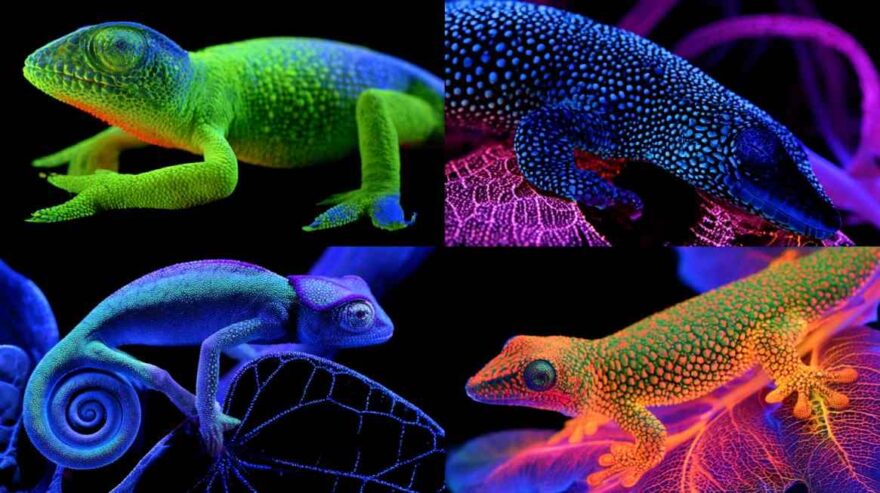
Animals that glow in the dark turn ordinary night into a hidden light show. On a moonless coast, waves can flash blue as they break.
Inside a cave, a ceiling can sparkle like a sky full of stars. In a backyard, a scorpion that looked dull by daylight can shine blue-green under ultraviolet light.
Glowing animals do not all shine in the same way. Some make light through chemical reactions. Some depend on glowing bacteria.
Nature created glow-in-the-dark effects long before humans made glow sticks or luminous materials. More than 3,500 animal species have been confirmed as biofluorescent. About 76 percent of ocean animals are bioluminescent, meaning they make light or host bacteria that do.
Animals that glow in the dark have that perk because of survival, communication, camouflage, hunting, defense, mating, and mysteries that scientists still have not solved.
The Ocean is the Earth’s Biggest Light Show
Ocean life offers the largest stage for animals that glow in the dark. Sunlight weakens with depth, and darkness can make even a small flash useful.
In black water, light can reveal prey, hide a body outline, attract a mate, or confuse a predator.
Why is glowing so common underwater
Many ocean animals make light themselves or host glowing bacteria. In dark water, bioluminescence can be as useful as speed, armor, or camouflage.
- Locating prey when vision is limited
- Avoiding predators during movement
- Sending signals to mates or members of the same species
- Hiding silhouettes against faint light overhead
- Creating sudden flashes that distract attackers
Bioluminescence has appeared independently 27 times among ray-finned fishes, a group that includes about half of all living vertebrate species.
At least 1,500 fish species are known to be bioluminescent, including sharks and dragonfish, and new examples are still being identified.
Hunters with built-in lights
Built-in light can turn darkness into a hunting advantage. Some animals use glow like bait, while others use it like a private search beam.
Female anglerfish use a glowing lure near the head to attract prey. A curious animal moves close, and the anglerfish strikes before the prey can escape.
Dragonfish use light-emitting organs called photophores on their cheeks. Some can emit red light, which gives them a major advantage because red light does not travel more than about 100 meters below the ocean surface.
Many abyssal animals are red, making them hard to see in low light. Dragonfish can see red and use it to find prey that may not detect the light at all.
Camouflage through light
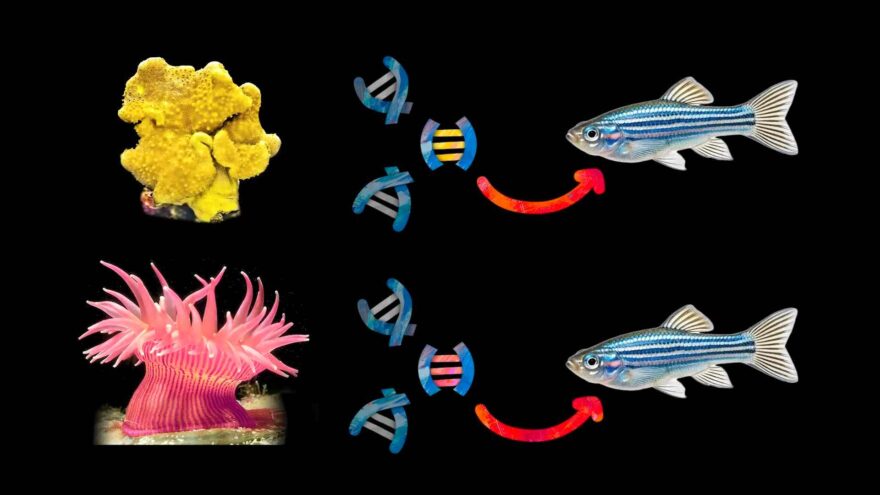
Glow does not always make an animal easier to spot. Some deep-sea creatures use light to disappear.
Counterillumination helps animals hide their silhouettes. Light-producing organs on the belly can match faint brightness overhead, making the animal harder for predators below to see.
Hawaiian bobtail squid use bioluminescent bacteria living inside a special organ. At night, that glow helps the squid match the moonlight and reduce its shadow.
Southern bobtail squid can adjust light intensity as conditions change, allowing the glow to match changing levels of natural light.
Defensive light displays
Light can also work as a distraction. Some ocean animals use sudden glow to buy time during an attack.
Abyssal shrimp can release glowing material that blinds or distracts predators. Banded brittle stars can drop glowing green arm tips as decoys, leaving predators focused on the bright piece while the animal escapes.
Comb jellies show why glowing-looking animals need careful study. Their rainbow shimmer often comes through light bending across moving cilia, not true bioluminescence.
Similar visual effects can look alike to human eyes, even when the biology behind them differs.
Interesting Fact: Recently conducted studies tell us that there are far more fluorescent mammals than the science thought it was before.
Tiny Creatures, Huge Displays
Small animals can create some of the largest night displays on Earth. A single glowing cell may be nearly invisible, but millions acting at once can make water sparkle.
Dinoflagellates and glowing waves
View this post on Instagram
Dinoflagellates are one-celled marine plankton that can flash blue when disturbed. Waves, paddles, swimming fish, and footsteps in shallow water can trigger their light.
Some dinoflagellates create light through a chemical reaction similar to the one used by fireflies. A molecule called luciferin helps power that glow in certain species.
Vieques, an island in Puerto Rico, is famous for a bioluminescent bay filled with dinoflagellates. Low moonlight makes the glow easier to see. Their light usually appears blue, although intense blooms can look white to human eyes.
- A fish can leave a glowing outline behind its body.
- A paddle can draw a blue trail across the water.
- A breaking wave can scatter sparks across the surface.
Glowworms in caves
Cave glow often belongs to predators, not stars. Many glowworms in Australia and New Zealand are larvae of small flies.
Australian glowworms are fungus gnats in the family Keroplatidae. New Zealand glowworms include larvae of the small fly Arachnocampa flava.
Glowworms hunt by hanging sticky silk or mucus-coated threads. Their light attracts insects, and the insects fly toward the glow before getting trapped.
A cave ceiling full of glowworms can look peaceful, but each point of light marks a waiting snare.
Backyard and Land Animals That Glow
Glowing animals are not limited to oceans and caves. Many land animals reveal hidden colors under ultraviolet light, including scorpions, frogs, insects, birds, reptiles, mammals, and other invertebrates.
Scorpions – classic UV glow
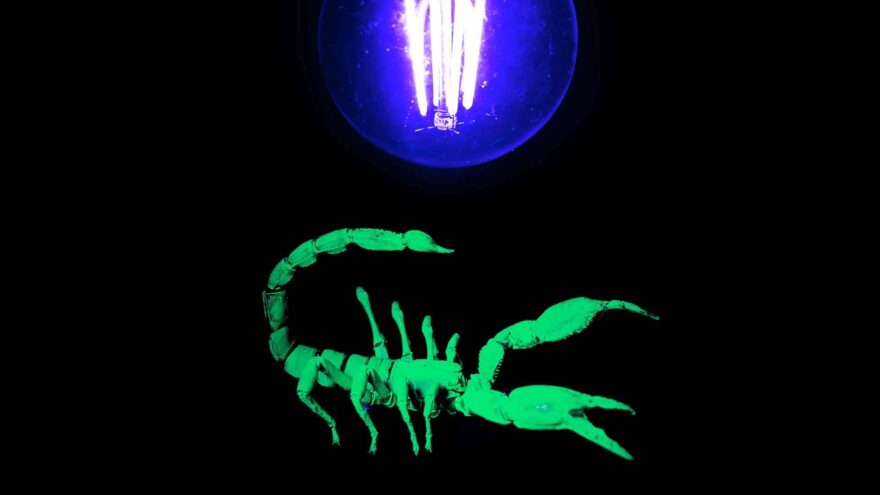
Scorpions are among the easiest fluorescent animals to recognize. Under ultraviolet light, they often shine greenish or blue-green. All 2,500 known scorpion species glow under UV light.
Scorpions have existed for more than 400 million years, making their fluorescence part of an ancient animal line. Scientists still debate why it happens.
Recent research has identified a fluorescing chemical in scorpion exoskeletons. Related chemicals have shown antifungal and anti-parasitic properties in other organisms, adding another clue to a mystery still being tested.
Amphibians – frogs in neon colors
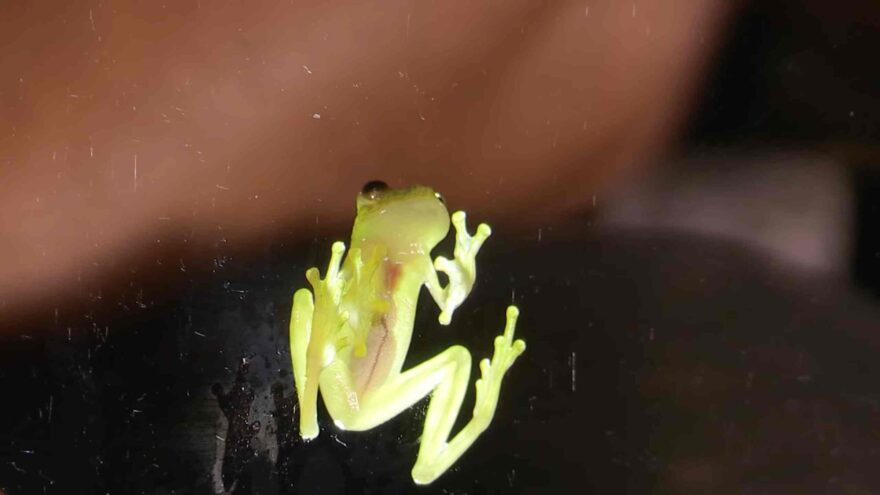
Amphibians add bright color to the story of animals that glow in the dark. Some frogs shine electric blue, teal, or green under ultraviolet light. Every amphibian species tested so far has shown fluorescence.
Polka-dot tree frogs are especially striking. Their glow can account for about 30 percent of all light coming off the animal. It is roughly 18% as bright as a full moon.
Those wavelengths match colors that frog eyes detect well, suggesting the glow may help frogs signal to each other.
Polka-dot tree frogs can also leave fluorescent residue on surfaces they touch. That detail supports the idea that their glow may have a biological meaning.
Birds, insects, and other overlooked glow
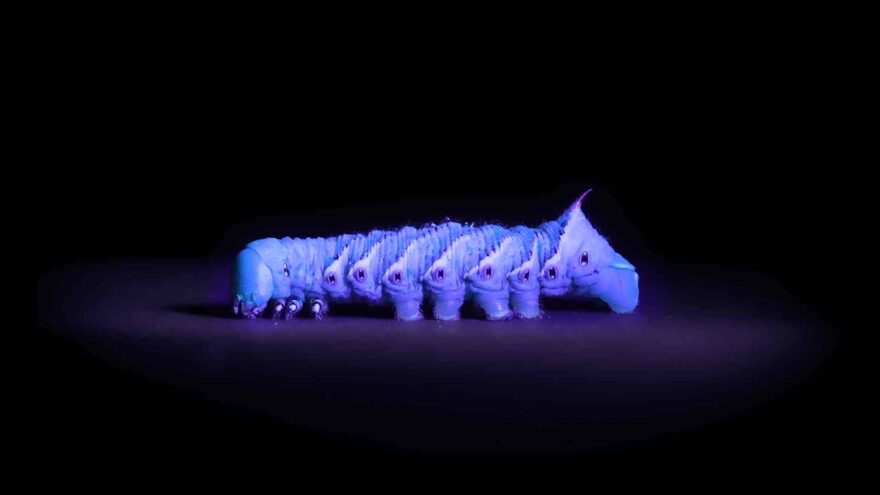
Insects and birds show that land-based glow can be tied to courtship, parenting, and hidden signals. Moths were among the first animals scientists learned could glow, with observations dating back to the early 1900s.
Fireflies are the classic land animals that use light to find mates.
- Puffin bills become more intense under ultraviolet light.
- Some parrots have biofluorescent feathers that may make them more attractive to mates.
- Gouldian finch chicks have fluorescent “beads” near their beaks that may guide parents during feeding inside dark tree hollows.
Land animals can glow in ways humans rarely notice without special light. Ordinary daylight hides much of the signal.
Mammals That Glow – A Surprise Discovery
Mammals may be the most surprising part of the story. Many familiar species look ordinary in daylight, then show unexpected colors under ultraviolet light.
Mammals under UV light
Scientists are finding glowing mammals across several groups, including flying squirrels, wombats, African springhares, and Australian marsupials.
One memorable case involved researcher Linda Reinhold spotting an antechinus in an Australian rainforest. In normal light, the small mouse-like marsupial looked soft brown.
Under ultraviolet light, it glowed bright white and looked like a fuzzy glowstick.
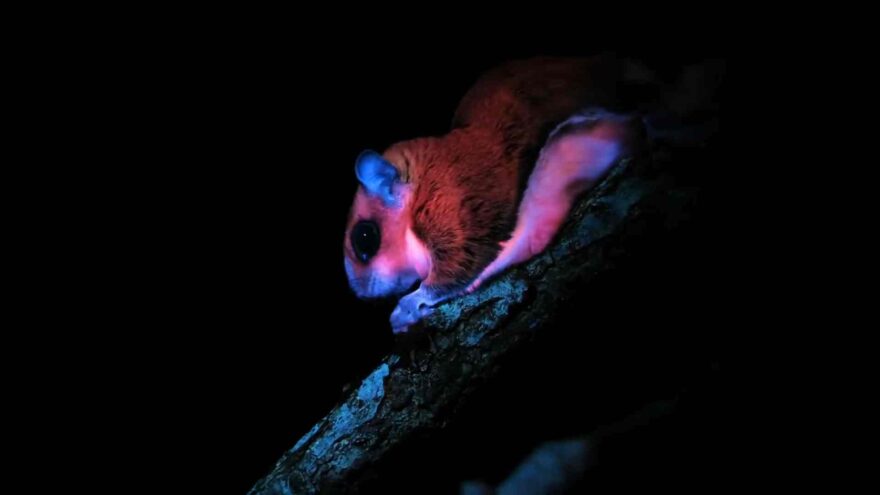
- Flying squirrels glow pink and blue.
- Platypuses glow blue-green.
- African springhares show patches and swirls of pink and orange.
- Greater bilbies show white ears.
- Ghost bats show golden-yellow wings.
- Tasmanian devils show blue ears, eyes, and teeth.
- Echidnas show white spines.
- Long-nosed bandicoots glow bright pink.
New World flying squirrels in the Glaucomys genus live across the eastern and central United States, Canada, and southern California. For many people, mammal fluorescence may exist closer to home than expected.
Why mammal glow is mysterious
Mammalian fluorescence is still poorly explained. Scientists want to know when it first appeared, why so many mammals glow, and if glowing mammals can see one another’s glow.
Monotremes, marsupials, and placental mammals on multiple continents all fluoresce. That pattern suggests biofluorescence may be an ancient mammalian trait.
- Communication between members of the same species
- Camouflage against leaves, bark, or dim background light
- Warning coloration
- Vision that includes ultraviolet light
- Visual noise that confuses UV-sensitive predators
- Chemical side effects with little survival value
Chemistry may explain part of the effect. African springhares’ pink-and-orange glow comes through organic compounds called porphyrins.
Mammal fur contains keratin, which can fluoresce naturally. Porphyrins are strongly fluorescent and break down in light, so nocturnal animals may keep them more easily.
Mammalian glow may help some species and matter little in others. Current evidence points to chemistry, behavior, vision, and many unanswered questions.
@lindsaynikole explain yourself perry #HaventSeen #platypus #perrytheplatypus #animals #edutok #evolution #science #themoreyouknow ♬ HOT & SPICY SALSA – Jaycee Mante
Closing Thoughts
Animals that glow in the dark reveal how much of nature human eyes usually miss. Blue waves, sparkling caves, fluorescent forests, and shining mammals show that night is not empty or silent. It can be full of signals, traps, warnings, and disguises.
Some animals create light chemically. Others turn invisible or short-wavelength light into visible color. Others only appear to shine because light bends or scatters through body parts.
Oceans glow. Caves glow. Forests glow. Even mammals in backyards, rainforests, deserts, and museum collections may glow.
Nature’s living light show is more than a beautiful spectacle. It can be a survival tool, a communication system, a hunting method, a disguise, a warning signal, and a mystery still waiting to be solved.