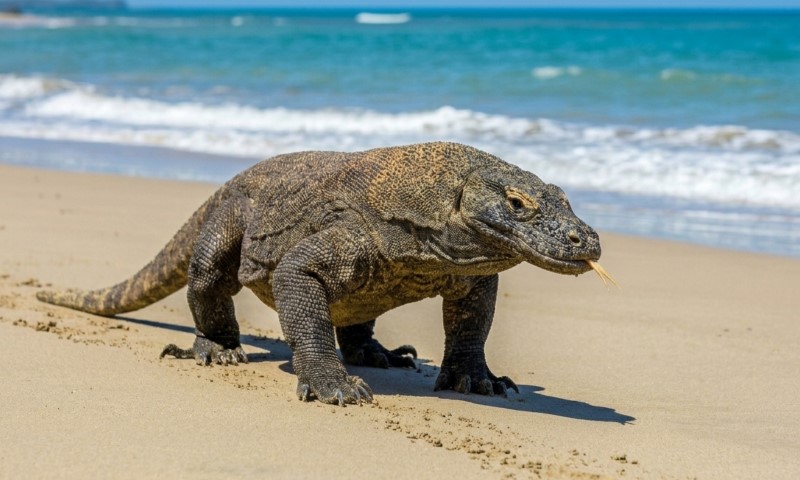
Speed among venomous animals is not only about how fast an animal moves. In a medical emergency, strike speed means how quickly venom can enter the body and cause severe symptoms or death after a bite, sting, spine puncture, or skin contact.
Ranking these venomous animals requires looking at venom delivery speed, symptom onset, and the danger window before a victim may face cardiac arrest, respiratory failure, paralysis, shock, or death. Some of the fastest threats are not large predators.
Jellyfish, spiders, snakes, octopuses, and camouflaged fish can be far more dangerous than their size suggests.
Exact timing can change based on venom dose, bite or sting location, victim size, overall health, and how quickly medical care begins.
Even so, each animal listed below has a reputation for fast venom action and serious danger when envenomation occurs.
1. Australian Box Jellyfish
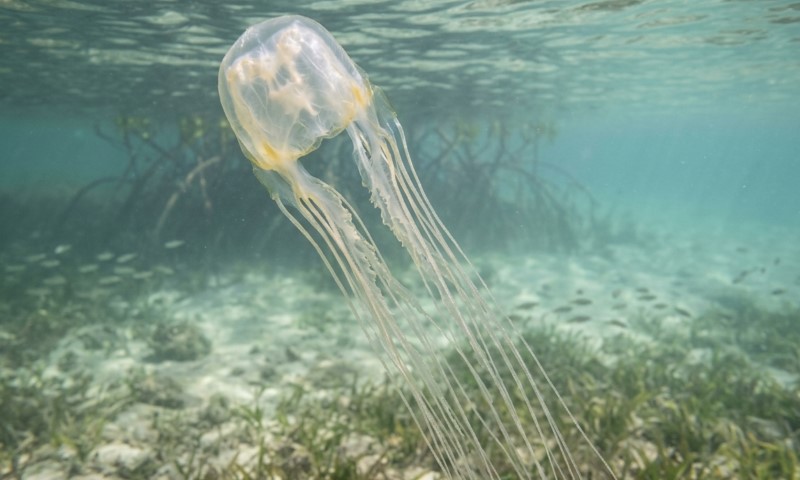
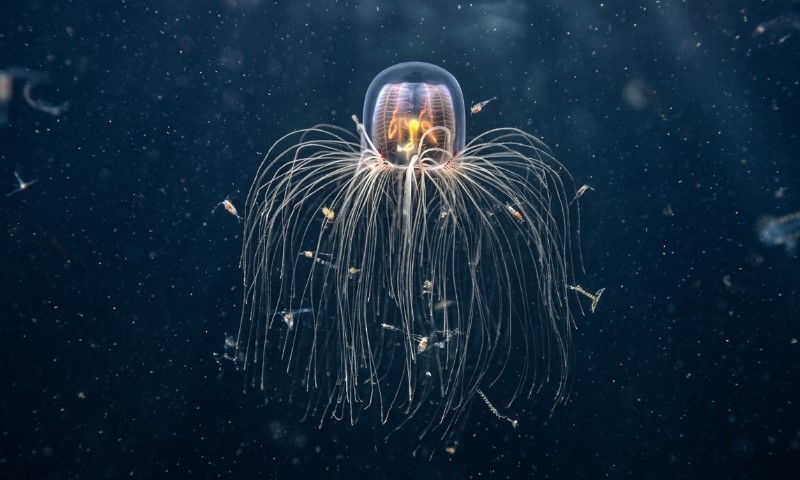
Australian box jellyfish rank first among these venomous animals because venom delivery begins the moment tentacles touch skin.
Its scientific name is Chironex fleckeri, and it lives in the tropical Indo-Pacific.
Tentacles can reach about 3 meters, or 10 feet, and they are covered with nematocysts. Nematocysts are microscopic venom-filled darts that fire when triggered by touch.
Contact can cause extreme pain almost instantly, followed by shortness of breath and cardiac arrest within minutes.
Several details make contact with this animal especially dangerous:
- Venom enters through many tentacle contact points at once.
- Skin contact can trigger thousands of nematocysts in a very short time.
- Pain may begin before a victim can move away or receive help.
Death has been reported in as little as two minutes, while cardiac arrest can occur within about five minutes. Within five minutes, victims may experience extreme pain, breathing trouble, and cardiac collapse.
Australian box jellyfish rank so high because the strike is not a chase or bite. Contact alone can deliver venom almost instantly, giving the body very little time before a medical emergency begins.
2. Blue-Ringed Octopus
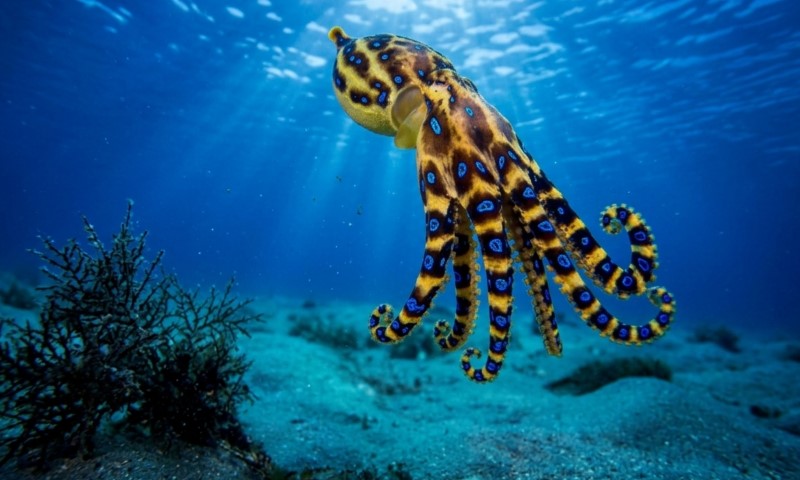
Blue-ringed octopus bites can be especially dangerous because the bite may be small and often painless.
Its scientific name is Hapalochlaena, and it lives in waters between Australia and Japan, often in shallow coastal areas and tide pools.
A parrot-like beak delivers venom that contains tetrodotoxin, the same toxin associated with pufferfish. One bite can contain enough venom to kill more than 20 people, and no antivenom exists.
Symptoms can include tingling, breathing difficulty, paralysis, and rapid respiratory failure. Respiratory failure can occur within about 10 minutes, and death may follow within about 30 minutes without urgent support.
Danger often grows because early signs may not feel dramatic at first:
- A bite may leave little pain at the wound site.
- Paralysis can develop while a victim is still conscious.
- Survival may depend on assisted breathing until the toxin wears off.
Blue-ringed octopus ranks near the top because a victim may not realize a bite happened until paralysis begins.
Among venomous animals, few combine such a subtle bite with such rapid respiratory danger.
3. Sydney Funnel-Web Spider
Sydney funnel-web spider ranks high because its venom can affect the nervous system within minutes. Its scientific name is Atrax robustus, and it is native to Australia.
A bite can be serious because the spider has large, powerful fangs. Its body can measure about 2 inches long, and its fangs can pierce fingernails and soft-toed shoes.
Early symptoms may include burning across the face, drooling, breathing trouble, coma, circulatory collapse, and death.
Full symptom progression can happen within about 15 minutes in severe cases.
Antivenom has changed the risk picture. Since Australia’s antivenom program began in 1981, no deaths have been recorded there due to Sydney funnel-web bites.
Even so, every suspected bite should be treated as a medical emergency because the venom can act quickly.
Fast treatment matters because the early stage can escalate in several ways:
- Heavy sweating and saliva production may appear soon after the bite.
- Breathing problems can become severe as venom affects nerve signaling.
- Hospital care may be needed even before the full symptom pattern appears.
4. Eastern Brown Snake
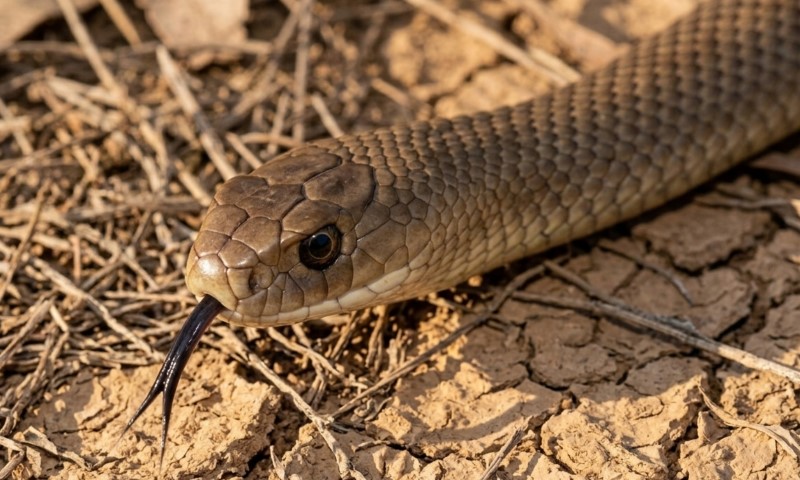
The eastern brown snake is one of the most dangerous venomous animals in Australia because it can strike fast and leave marks so small that a victim may not realize a bite happened.
Its scientific name is Pseudonaja textilis.
Common in rural eastern Australia, especially in agricultural areas, it often lives near places changed by farming. Its fangs average only about 3 millimeters, which can make bite marks hard to notice.
Venom contains neurotoxins, cardiotoxins, and nephrotoxins.
Effects can include uncontrollable bleeding, paralysis, kidney damage, heart problems, and death. Severe bites can be fatal within about 15 minutes.
Eastern brown snake ranks here because it combines speed, subtle bite marks, and venom that can rapidly disrupt blood, nerves, kidneys, and the heart. It is also identified as the snake responsible for the most human deaths in Australia.
Several factors make a bite harder to judge quickly:
- Small fang marks may be missed during the first check.
- Early symptoms may not match the seriousness of the venom load.
- Blood-clotting problems can become life-threatening without rapid care.
5. King Cobra
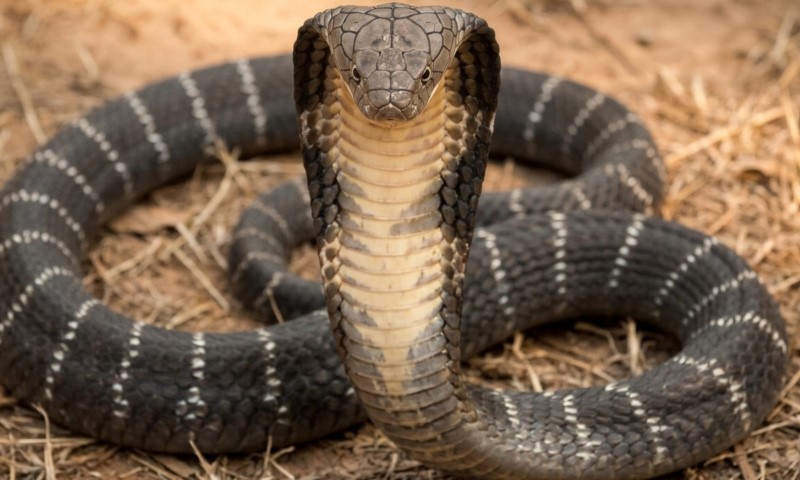
King cobra earns its place because a serious bite can deliver a large venom dose. Its scientific name is Ophiophagus hanna, and it can reach up to 18 feet long.
When threatened or pursuing prey, it can raise nearly one-third of its body off the ground. Fangs can reach about 10 millimeters, allowing a powerful bite with significant venom delivery.
A severe bite can create a fast respiratory crisis:
- Venom can interfere with nerve signals needed for breathing.
- Large body size allows a greater venom yield than many smaller snakes.
- Reach and height can make defensive encounters more dangerous at close range.
Venom can shut down the respiratory system. In severe envenomation, death is possible within about 15 minutes.
King cobra bites are rare in the wild, averaging fewer than five deaths per year, partly because the snake often avoids humans. Still, its size, reach, fang length, and venom volume make a serious bite extremely dangerous among venomous animals.
6. Coastal Taipan
View this post on Instagram
Coastal taipan is known for a quick bite and repeated strikes. Its scientific name is Oxyuranus scutellatus, and it is found mainly in coastal regions of northern Australia. It has also been recorded farther inland in sugar plantations and forests.
Average length is about 6 feet, with some records near 8 feet. Fang length is around 12 millimeters, giving it the ability to inject venom efficiently.
A serious bite may be fatal within about 30 minutes. Records suggest it can inject substantial venom on a second or third bite, not just the first.
Coastal taipan ranks here because danger comes not only through venom potency, but also delivery behavior. It is agile, may bite repeatedly, and may keep delivering large venom doses.
Bite behavior raises the danger level in ways that matter during an encounter:
- Multiple strikes can increase total venom exposure.
- Long fangs can help deliver venom effectively through skin and tissue.
- Fast movement can make it difficult for a person to react safely.
7. Stonefish
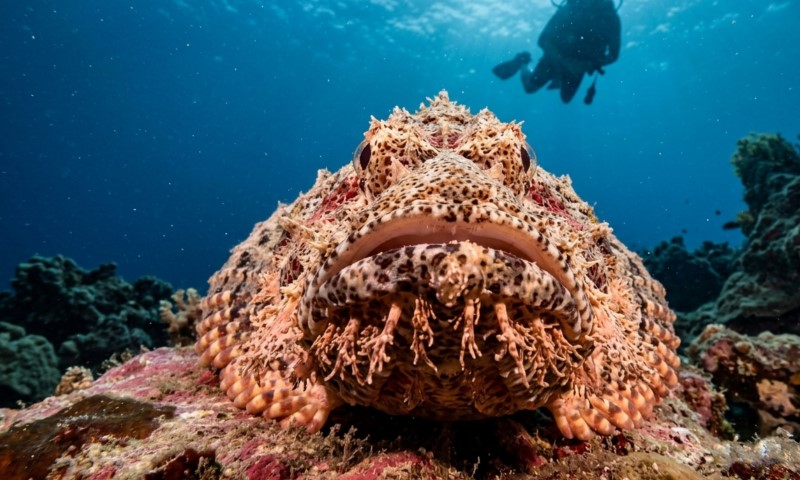
Stonefish are often described as the most venomous fish in the world. They live in the Pacific and Indian Oceans and are masters of camouflage, often blending into the ocean floor or coral reefs.
A stonefish does not need to chase or bite. Venomous dorsal spines deliver venom when someone steps on the fish or presses against it by accident. Pain is immediate and can be extreme.
Symptoms can include irregular heartbeat, temporary paralysis, shock, extreme pain, and possibly death. Serious systemic effects can follow quickly, and treatment may require antiserum.
Accidental contact can become dangerous because the fish is so hard to notice:
- Spines can puncture feet or hands when pressure is applied.
- Camouflage can make the animal look like rock, coral, or seabed debris.
- Immediate pain may be followed by wider effects across the body.
Stonefish rank among the fastest-contact venomous animals because their strike happens instantly once pressure hits the spines. It is not an active attacker, but accidental contact can create a severe emergency.
Summary
Fast venom danger often comes in small, hidden, or accidental-contact animals. Size does not decide the threat level.
Venom delivery speed, symptom escalation, and the time left to reach medical care matter more.
Among venomous animals, the most dangerous strike is often the one a person never sees coming.
A nearly invisible tentacle, painless bite, tiny fang mark, or camouflaged spine can start a medical crisis within minutes.