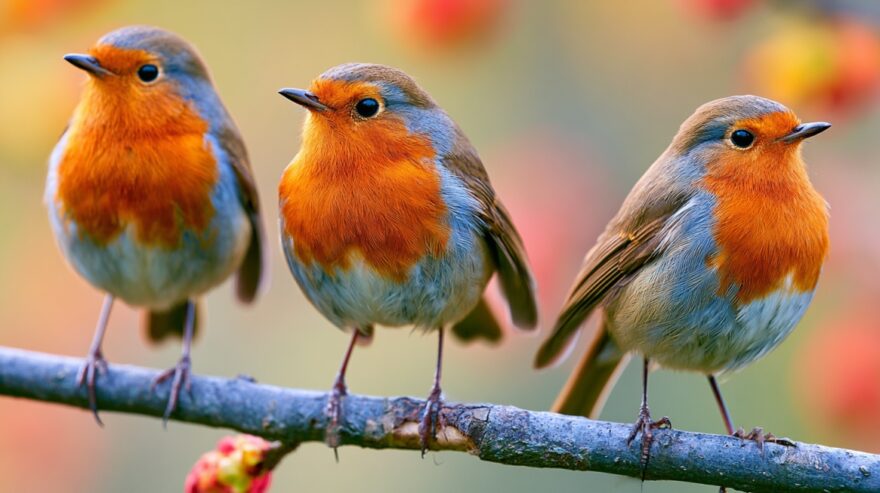
Every spring, robins become part of a scene many people know well. They hop across lawns, pause with their heads tilted, tug worms out of damp soil, and sing in the cool light of early morning.
Bright orange breasts and clear voices make them easy to spot after weeks of gray winter weather.
Many people treat that first robin sighting as a sign that winter is finally loosening its grip. A robin on a lawn can feel like proof that warmer days are near.
Yet that familiar idea raises a more interesting question. Are robins truly arriving all at once in spring, or are people simply noticing them more?
Robins seem to be everywhere because spring makes an already common bird louder, bolder, hungrier, and much easier to see.
Robins Are Already Among North America’s Most Common Birds
American robins are not rare seasonal visitors. Across North America, they rank among the birds people recognize most easily, especially in woods, fields, yards, parks, orchards, and gardens. Comfort around human activity helps explain why so many people see them during ordinary days.
American robins belong to the thrush family, along with bluebirds. Size, upright posture, orange breast, and ground-hunting behavior make them easy to identify.
Their range stretches from Canada to Mexico, giving them a wide presence across the continent.
- Estimated population: 366 million
- Reported population increase since the 1960s: seven-fold
- Continental status: considered the most ubiquitous bird in North America
Numbers that large mean spring sightings are not random surprises. Robins are abundant, adaptable birds already living in many of the same places people use every day.
Not All Robins Migrate
A common belief says robins leave cold areas in winter and return together in spring. Reality is more complicated. Some robins migrate south when winter arrives, but others stay in northern areas when food and weather conditions allow it.
- Fluffed feathers trap warm air close to the body.
- Countercurrent heat exchange helps keep blood warm.
- Group roosting lets birds conserve body heat during cold nights.
Those adaptations allow some robins to tolerate conditions that might otherwise seem too harsh.
Food availability matters as much as temperature. In Iowa, most robins still head south for winter, yet some stay during years with good fruit and berry supplies.
In other areas, robins may seem absent during winter because they gather in nearby woods, shrubs, and protected spaces instead of open lawns.
Spring does not always mean robins have returned. Often, it means local robins have left hidden winter areas and moved back into open places people notice.
Why Robins Suddenly Become More Visible
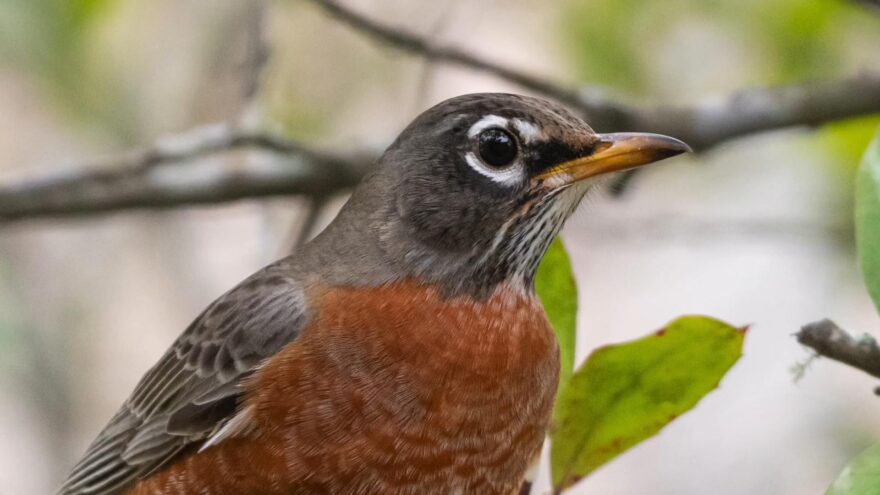
During winter, robins often gather in flocks. Large groups may feed near berry-producing trees, shrubs, wooded edges, and sheltered areas.
In those places, they can be present but easy to miss. Quiet winter flocking does not attract as much attention as spring song and lawn activity.
As the weather warms, those winter flocks break apart. Individual robins and pairs begin moving into yards, gardens, parks, and other open spaces. Warmer soil, nesting opportunities, and breeding behavior pull them into places where people spend time.
- Feeding becomes more active on open ground.
- Singing becomes louder and more frequent.
- Chasing and territory defense become easier to see.
- Pair movement replaces quiet winter grouping.
A bird hidden in a wooded area in January may be hopping across a front yard in March.
Spring Food Sources Bring Robins Into Open Spaces
Robins are closely tied to lawns because lawns offer food they can easily reach. Earthworms, grubs, insects, berries, and fruits all play a role in their diet.
When spring warmth softens the soil and increases insect activity, robins gain access to a wider menu in open areas.
Morning robin behavior is especially familiar. A robin runs a few steps, stops, tilts its head, and pulls an earthworm or grub out of the ground. Early in the day, worms and grubs often dominate feeding. Later, robins may shift toward berries and fruits.
- Morning: worms and grubs often draw robins onto lawns.
- Later in the day: berries and fruits become more important.
- Spring gardens and yards: insects, worms, and berry plants create strong feeding opportunities.
Robins also feed efficiently because of their vision. Each eye can focus on different things, a trait called monocular vision.
That ability helps them detect movement and locate food while moving across open ground. A robin can consume up to 14 feet of earthworms before noon, which shows how intense spring feeding can become.
View this post on Instagram
Breeding Season Changes Robin Behavior
Spring is also breeding season, and breeding changes how robins act. Males sing more often, guard territory, display, chase rivals, and move boldly through open spaces. Behavior that was quiet during winter becomes loud and visible as pair formation and nesting begin.
A robin may look especially large during this time because a male is puffing up his chest.
That display can help defend territory or attract a female. Singing before sunrise, perching in obvious spots, and patrolling a yard are all breeding-season behaviors that draw attention.
Nesting adds even more activity, and robin breeding data shows how busy adults become:
| Robin breeding detail | Data |
|---|---|
| Clutch size | 3 to 5 eggs |
| Egg laying pace | 1 egg per day |
| Incubation period | 16 to 17 days |
| Nest feeding period | Another 16 to 17 days |
| Typical Iowa nesting goal | Two successful nest attempts between April and August |
Nest building is a careful process. Robins press grass and twigs into a cup shape, then use wings, beak, and feet to plaster the outside with mud.
Softer materials such as moss, thread, paper, or feathers line the inside.
Eggs usually hatch in about two weeks, and young robins spend roughly two more weeks in the nest before they can fly. All of that work makes adults busy, vocal, territorial, and highly visible.
Why Some Robins Look Bigger in Spring
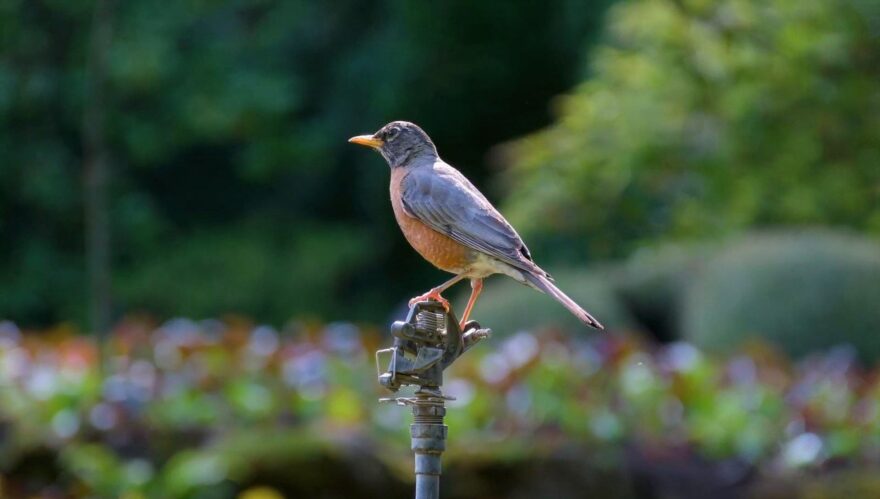
Early spring robins sometimes look unusually round. A common guess is that a large-looking robin must be carrying eggs, but that is usually not the reason. Cold conditions are often the main cause.
On cool spring mornings and chilly days, robins puff out their feathers in a behavior called rousing.
Rousing traps air inside the down feathers, creating insulation around the body. More trapped air means better heat retention, so the bird looks larger even though its actual body size has not changed.
- Rousing traps warm air in the feathers.
- A male may puff his chest while guarding territory or attracting a mate.
A “fat” spring robin is usually showing insulation behavior, display behavior, or both. Body size has not suddenly increased.
Are Robins Really the First Sign of Spring?
Popular tradition often treats the first robin sighting as the first clear sign of spring. That idea is partly true in a cultural sense.
Robins are visible, familiar, and closely linked with warmer weather in the minds of many people.
Scientific reality is more cautious. Some robins migrate, but others stay in the same region during winter. Because local birds may already be nearby, seeing one in early spring does not always prove that migration has begun.
- Warblers and other neotropical songbirds often signal spring movement more clearly.
- Many travel along the Atlantic Flyway after wintering in Central and South America.
- Yellow-throated warblers often arrive in mid-to-late March.
- Warmer winters can alter timing, food supplies, and seasonal behavior.
Robins still carry strong cultural meaning as signs of spring. As scientific indicators, though, they can be less reliable than birds that make longer seasonal trips.
Climate and Adaptability Help Explain Robin Abundance
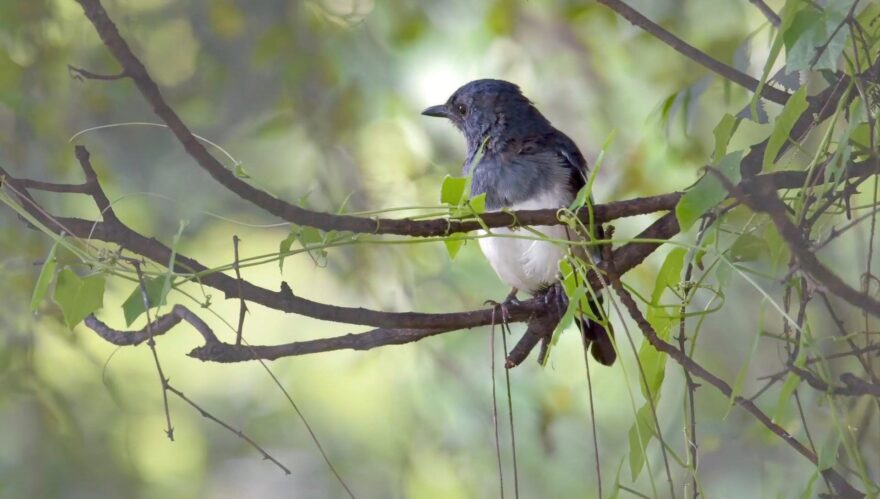
Some Robins migrate, while others stay in place through winter. Some gather in protected wooded areas during cold months, while others move into open lawns as conditions warm.
Their seasonal behavior changes with food, temperature, and breeding needs.
Warmer winters can make northern areas more survivable for some robins. Rising temperatures and shifting weather patterns allow more birds to stay in places that once may have been too difficult in winter. Food still plays a major role.
Good fruit and berry supplies can support robins through cold months, especially during years when those foods are plentiful.
- Seasonal movement varies by region and weather.
- Winter flocking improves safety and warmth.
- Roosting together helps conserve heat.
- Diet shifts between worms, grubs, insects, berries, and fruits.
- Open lawns and gardens become more useful as the soil warms.
Robin abundance is not only about migration. It is also about adjustment, survival, food choice, and timing.
Closing Thoughts
Robins seem to fill spring because several changes happen at once. They are already extremely common across North America, with a population estimated at 366 million.
Some migrate, but many spend winter nearby. As temperatures rise, winter flocks break apart, and birds move into lawns, gardens, parks, and yards.
Food also pulls robins into view. Warmer soil makes worms, grubs, and insects easier to reach. Berries and fruits add more feeding options later in the day.
Breeding season makes robins sing, display, defend territory, build nests, and feed young. Cool mornings can make them look larger because fluffed feathers trap insulating air.